Get Full Government Meeting Transcripts, Videos, & Alerts Forever!
Get email alerts on the School Conduct Devices topic
No spam. Unsubscribe anytime.
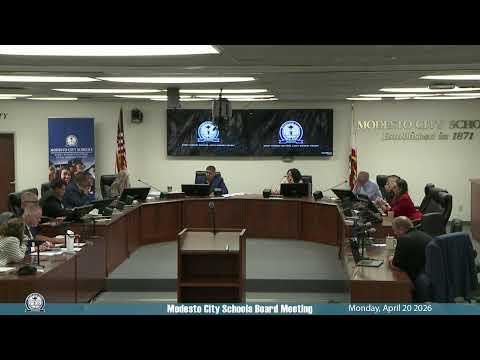
Modesto board adopts tighter phone rules for students after hours of debate
Summary
After more than three hours of public comment and trustee debate, the Modesto City Schools board revised and approved a conduct‑code change limiting student use of electronic devices during the instructional day, deleting broader permissive language and directing staff to develop operational guidance for consistent enforcement.
The Modesto City Schools board on April 20 approved a revision to the district's student conduct code that sharply restricts student use of electronic signaling or communication devices during the student's instructional day.
The change, adopted after hours of public comment and extended trustee debate, requires devices to be turned off and not visible during a student's instructional day and establishes progressive consequences for repeated violations. Trustees also removed a preliminary permissive paragraph from the draft language after several members said it introduced ambiguity.
Why it mattered: Parents and teachers spoke at length at the meeting. Supporters of a strict policy — including classroom teachers and instructional coaches — said a strong restriction would reduce classroom distractions, improve student focus and address rising concerns about mental health and online harms. Opponents — including parents, representatives of employee groups and some high‑school students — urged a hybrid approach that would permit device use during noninstructional time such as lunch and passing periods; they warned a full ban would be hard to police and could disproportionately burden families unable to pick up confiscated phones.
What trustees debated: Board members questioned how a districtwide rule would be enforced fairly across campuses, how to handle exceptions (health needs, IEP/504 accommodations, emergency situations), and whether the policy should be ‘‘bell‑to‑bell' (from campus arrival to dismissal) or defined as the student's instructional day. Several trustees said they preferred starting with a stricter rule and adjusting later if needed; others emphasized implementation details and equity for families who could not come to campus to retrieve devices.
Operational next steps: The board directed administration to finalize implementation details and communications, including an FAQ for families and staff. Administration and union leaders also discussed site‑level operational options such as referral to intervention centers rather than asking classroom teachers to act as enforcement officers.
Vote: The motion to approve the revised conduct code language passed after amendment. The meeting recorded at least one formal dissent: Student Representative Juliana Garcia voted no. Trustees who proposed and seconded the motion were recorded on the transcript (mover: Trustee Mestas; second: Trustee Marks). The board also asked administration to revisit operational issues such as who accepts confiscated devices and how repeated violations should be managed.
What comes next: The revised conduct code language will be communicated districtwide before implementation. Officials said they will monitor compliance, collect data and return with any recommended adjustments based on site experience and equity concerns.