Get Full Government Meeting Transcripts, Videos, & Alerts Forever!
Get email alerts on the Un Leadership topic
No spam. Unsubscribe anytime.
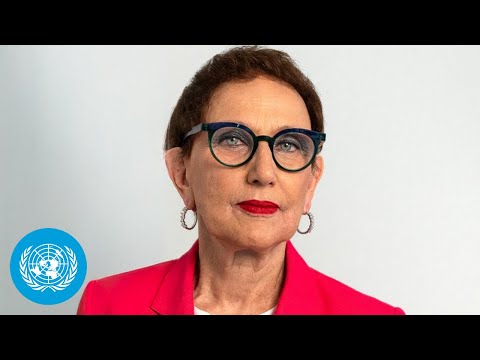
Rebecca Greenspan outlines peacemaking-first agenda and calls for urgent UN reform
Summary
In an interactive General Assembly dialogue, candidate Rebecca Greenspan laid out three priorities—peacemaking, reform for delivery and cooperation for the future—and answered member-state questions on Security Council reform, financing, multilingualism and climate vulnerabilities.
Rebecca Greenspan, a candidate for United Nations secretary-general, told the General Assembly that her top priorities would be "peace, reform, and future," pledging to make peacemaking the office's first charge and to restructure the secretary-general's office to field agile mediation teams.
Greenspan summarized her approach as proactive: "If elected secretary-general, I will be a peacemaker. I will act before conflicts erupt, be the first to pick up the phone," she said, citing her work on the Black Sea initiative as a concrete example of persistent mediation that reopened grain exports and averted a food crisis.
The interactive dialogue gave member states and civil society a chance to press Greenspan on policy detail. The representative of Uruguay, speaking for the Group of 77 and China, asked how she would build on the UN80 reform work without eroding the intergovernmental balance, accelerate delivery of the 2030 Agenda, ensure gender and geographical balance in senior appointments, and address the Organization's liquidity crisis.
Greenspan answered that UN80 should not be discarded but that secretariat "discipline" was needed to avoid duplication and to make structural reforms effective. She said the UN must shift from supply-driven to country demand–driven delivery and pledged to "ask for the numbers day one" to guide budgetary decisions.
African states pressed Greenspan on Security Council reform and implementation of agreements to finance African-led peace operations, calling the lack of an African permanent seat a "historic injustice." Greenspan affirmed that a Security Council reflecting today's world would carry "heavier and better weight" and indicated she would prioritize implementation of existing resolutions and partnerships with regional organizations, including the African Union.
Delegations from the Francophone group and other regions asked how Greenspan would protect multilingualism and ensure senior team diversity. Greenspan described previous efforts to translate technical documents into additional languages and said her leadership team would be "plural" and high-performing, with regional and linguistic balance without sacrificing expertise.
Smaller delegations and representatives of small island developing states urged stronger support for climate adaptation, vulnerability indicators that reflect non‑GDP vulnerabilities, and better access to concessional finance. Greenspan highlighted debt burdens in vulnerable countries, noting that many developing countries spend a large share of revenue servicing debt, and promoted capitalizing multilateral development banks and crowding in private investment.
On the human-rights pillar and budget tradeoffs, the European Union and others warned that cuts could disproportionately harm human-rights work. Greenspan defended the indivisibility of the UN's three pillars and said early-warning on human-rights violations must be used for prevention.
Civil society organizations raised humanitarian-politicization concerns and protection of migrants and migrant women. Greenspan said humanitarian action must not be politicized and supported strengthening partnerships with local actors to keep aid focused on beneficiaries.
Greenspan proposed immediate institutional moves if elected: restructure the Executive Office to prioritize good offices and mediation, convene special envoys and SRSGs to assess field needs, and deploy small, flexible mediation teams. She framed the role as both political and managerial: "We cannot outsource administration," she said, arguing the secretary-general must lead management to effect change.
The session closed after a wide-ranging two-hour question-and-answer sequence. No formal decision was taken during the dialogue; it served as a public, interactive stage for candidates to present priorities and for member states and civil society to press for commitments and clarifications.