Get Full Government Meeting Transcripts, Videos, & Alerts Forever!
Get email alerts on the Land Use And Regulation topic
No spam. Unsubscribe anytime.
Residents urge caution on battery storage and data-center projects; Chamber and staff urge planning and regulation over moratoriums
Summary
During public comment, residents raised safety, water and power concerns about battery energy storage systems and data centers. Chamber and economic-development officials recommended a regulatory task force and planning overlays rather than an outright moratorium; Evergy tariff protections and franchise-fee examples were noted.
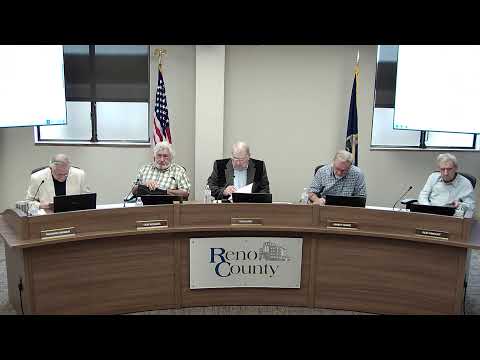
Several Reno County residents asked commissioners on April 22 to slow and scrutinize proposals for battery energy storage systems (BESS) and large data centers, citing fire risks, groundwater and power-consumption concerns.
Kurt Field, a county resident, told the commission he was concerned about potential fires from battery systems and the water and energy demands of data centers and said he believes many neighbors remain uninformed.
Deborah Tuftel, representing the Hutchinson Reno County Chamber and Greater Hutch Economic Development Partnership, said the two project types are distinct and summarized a March 11 forum that brought Kansas Department of Commerce and Evergy representatives to town. She urged the commission to form a broad-based task force and planning overlays to set setbacks, water-conservation requirements and conditional-use permit standards rather than declaring a moratorium. Tuftel said Evergy adopted a special tariff for large-load customers that requires long-term contracts and two years of collateral, and she cited a Hutchinson example that a 100 MW data center in I3 zoning could generate a roughly 5% franchise fee to the city (about $2.5 million per 100 MW).
Susie Ratcliff, another resident, said many citizens see moratoriums as a sign of leadership that protects local plans and resources; she urged commissioners to listen to constituent concerns and seek scientific data, not only online claims.
Commissioners and staff responded that the county already has procedure and conditional-use permit public-hearing processes; county planning and zoning staff were asked to draft proposed regulatory language, run scenarios and gather factual studies so the commission can make informed decisions. Several commissioners emphasized they welcome factual studies and that a moratorium can chill negotiation, while others said citizens' concerns should be addressed and that regulation could be tightened where needed.
No formal action was taken; staff will work with planning, the chamber and Kansas Commerce resources to prepare recommended regulatory approaches and model scenarios for future hearings.