Get Full Government Meeting Transcripts, Videos, & Alerts Forever!
Get email alerts on the Charter Revision topic
No spam. Unsubscribe anytime.
Fort Myers Beach council approves Charter Review Commission recommendations, directs ordinances and election coordination
Summary
The council unanimously accepted five recommendations from the Charter Review Commission — including added ethics language and a process for a resident compensation committee — and asked staff to prepare ordinances and coordinate any ballot timing with the Lee County Supervisor of Elections.
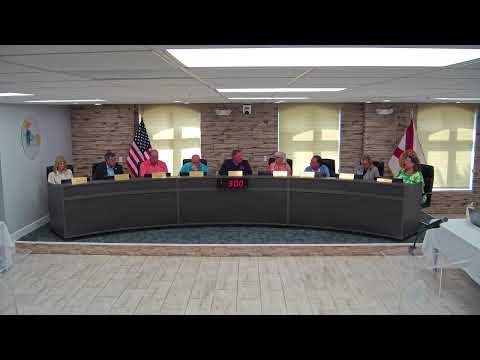
The Fort Myers Beach Town Council on April 20 unanimously approved a set of recommendations from the Charter Review Commission and directed town staff to draft the ordinance language and coordinate any referendum timing with the Lee County Supervisor of Elections.
Jim Dunlap, chair of the Charter Review Commission, told the council the panel reviewed every charter section from November through April and proposed five formal charter changes: strengthening ethics and transparency language; creating a compensation committee process to review mayor and council pay commencing in 2027 and not more often than every four years; clarifying how vacancies are filled (including vice mayor succession); removing obsolete candidate-qualification and canvassing-board language; and several scrivener cleanups.
“Commencing in 2027 and no sooner than every four years, a compensation committee consisting of five residents appointed by the council shall make recommendations for compensation adjustments to town council,” Dunlap said, describing the committee as an arms-length, peer‑comparison mechanism intended to reduce political pressure on salary decisions.
The council discussed whether some items could be handled administratively or by ordinance rather than placed on the ballot. Nancy (legal staff) said scrivener-type corrections may be handled by ordinance, but substantive charter amendments typically require an ordinance (two readings) and coordination with the Supervisor of Elections because of statutory deadlines.
Rebecca (council member) and others pressed for consistent drafting (for example, uniform language about a replacement serving "until the expiration of the term of the vacated seat") and for staff to minimize unnecessary ballot items when state law or county processes already render charter text obsolete. Nancy said she would analyze which changes could be done administratively and which must appear as separate referendum questions.
Council voted to terminate the Charter Review Commission (the advisory body) and to accept the recommendations as the basis for ordinance drafting and, if necessary, referendum language. The council asked staff to return with draft ordinances as soon as possible, noting the Supervisor of Elections’ early‑July filing deadline for ballot placement.
The town manager and legal staff will draft proposed ordinance language, identify which items could be handled by resolution or ordinance without a public referendum, and return to council in a future meeting for readings or ballot decisions.