Get Full Government Meeting Transcripts, Videos, & Alerts Forever!
Get email alerts on the Land Use topic
No spam. Unsubscribe anytime.
City staff outlines zoning history behind Monarch Villas and ‘The Retreat,’ prompting LDO text amendment work
Summary
Planning staff detailed how prior approvals and LDO language allowed recent conversions and short‑term rental proposals at Monarch Villas and The Retreat; staff recommended targeted text amendments to the Land Development Ordinance to remove contradictions and clarify where single‑family homes and short‑term rentals are allowed.
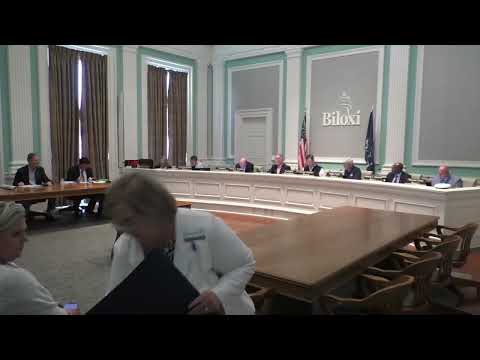
Biloxi — City planning staff provided a detailed chronology on April 21 explaining how two recent projects moved through the permitting process and why the city is advancing a Land Development Ordinance (LDO) text amendment.
Planning director Jerry Krill told the council that Monarch Villas — a 1.5‑acre site at Pops Fairy and Matsy roads — was originally permitted under RB zoning and built as houses, then later sought a plan development commercial (PDC) designation to allow lot subdivision and short‑term rental marketing. Krill said staff discovered a contradiction in the LDO: single‑family residences, while allowed in multiple business zones, are explicitly disallowed in PDCs. He described the sequence of approvals, noting a surprising variance and unanimous planning commission votes before council action in 2024.
Krill also reviewed the history of The Retreat, a multi‑phase plan‑unit development (PUD) approved in 2006. He said phase one — an eFitness building and some infrastructure — was built, and later developers used the previously approved master plan to continue phases two and three without new planning commission or council hearings because the developer proposed rental housing consistent with the earlier PUD. Krill emphasized that the 2010 LDO transition rules reclassified certain legacy PUDs, often assigning them to plan‑development districts (PDR), which in turn affected what commercial uses are permitted.
Staff told the council these histories explain why applicants and the public received initial permits and why some developers later proposed short‑term rental marketing. Planning staff said the department will prepare text amendments to remove the apparent contradictions and to create clearer use categories (staff flagged adding a separate sober‑living definition rather than reshaping an existing term to fit a single applicant).
Why it matters: The clarification aims to prevent future surprises for property owners, applicants and the public by aligning use permissions, removing contradictions, and ensuring that the LDO reflects intended policy for residential, rental and commercial uses.