Get Full Government Meeting Transcripts, Videos, & Alerts Forever!
Get email alerts on the Charter Schools topic
No spam. Unsubscribe anytime.
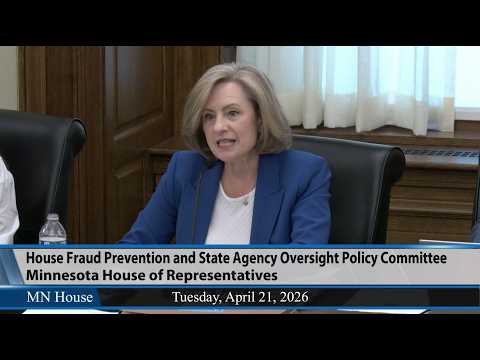
Committee continues charter-school oversight review; testimony stresses parental choice and governance gaps
Summary
A state oversight committee heard testimony from a parent and held an extended exchange about charter-school governance, investigative reporting on authorizers, and whether state law or authorizers should bear oversight responsibility.
The House Prevention and State Agency Oversight Committee returned to a previously paused discussion on charter schools, hearing a public testimony about family choice and a broad debate about governance and oversight.
Dr. BB Newman, who identified herself as a parent and home educator from Saint Anthony Village, spoke about choosing an online charter-supported model after finding variability and limited responsiveness in district schools. She said the charter option enabled sustained access to college-preparatory coursework for her eldest child and that "charters serve families who are engaged, proactive and seeking to remain within the public system while preserving their responsibility to guide their children's academic, moral and spiritual development."
Committee members cited investigative reporting that documented governance problems at multiple charter sponsors and flagged conflicts of interest, insufficient transparency and inconsistent oversight by authorizers. Members disagreed over where responsibility should sit: several urged that the Minnesota Department of Education (MDE) should use recent statutory tools to increase oversight, while others said the authorizer model and structural limits on charters (such as restrictions on facility ownership) have hindered charter performance.
Several representatives called for upstream fixes rather than downstream enforcement: proposals mentioned by legislators included revisiting accountability rules for authorizers, clarifying MDE authorities, and reviewing statutes that limit charters' operational tools. One member noted that some individual charter schools show strong student outcomes and said reforms should preserve successful models while addressing governance gaps.
The Chair said the committee would continue to coordinate with education policy and finance committees and encouraged further examination of authorizer accountability and potential statutory reforms.
The committee then moved on to consider the Feeding Our Future topic; no formal votes or bills were taken on charter reforms during this hearing.
Members asked the Department of Education and education committees to track outcomes and consider legislative proposals to address conflicts of interest, transparency and monitoring of sponsors and authorizers.