Get Full Government Meeting Transcripts, Videos, & Alerts Forever!
Get email alerts on the Data Center Transparency topic
No spam. Unsubscribe anytime.
Senate approves state/local omnibus after heated fight over NDA ban and data‑center disclosures
Summary
The Senate passed Senate File 4555 after intense floor debate over provisions banning nondisclosure agreements for local officials and new public‑hearing and disclosure requirements for proposed data centers, including a contentious dispute over whether security details should be disclosed.
The Minnesota Senate passed Senate File 4555 on April 20, 2026, after a daylong series of amendments and roll‑call votes that centered on transparency rules for proposed data‑center projects and limits on nondisclosure agreements for local officials.
Sen. Xiong, the bill's sponsor, described the omnibus as a "nuts and bolts" state and local government modernization package that updates administrative statutes and local authority. During floor debate, lawmakers adopted a string of floor amendments that added reporting, procurement and government‑operation clarifications and a suite of transparency measures addressing how municipalities handle proposed data‑center rezonings and conditional‑use permits.
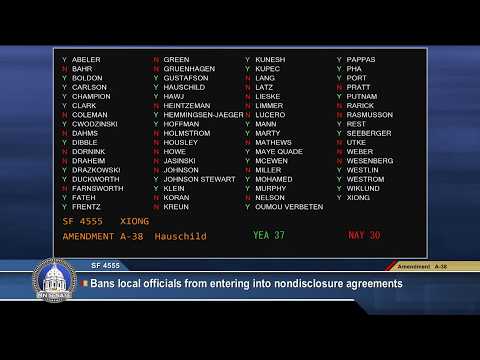
The most contested set of changes stemmed from an amendment offered by Sen. Hauschild that would bar use of nondisclosure agreements (NDAs) by local elected officials and staff in connection with data‑center projects and require municipalities to hold public hearings with specific disclosures. The amendment (A30‑8/A30‑5 and its successors) ultimately required local governments to disclose, 48 hours before a hearing, core facts about a proposed data center: the petitioner/applicant name, the end‑user, the site location, the estimated size and an estimate of utility usage for sewer and electrical capacity, and whether the site abuts residentially zoned property. Sen. Maye Quade, the amendment sponsor in floor debate, said the rules would ‘‘create an even playing field’’ and prevent companies from hiding project identities behind code names or NDAs so citizens could meaningfully weigh land‑use changes.
Opponents warned that some disclosure requirements raised security and constitutional concerns. Sen. Mathews and others argued singling out one industry risked equal‑protection challenges, and Sen. Latz and Sen. Westrom said retroactive language in early drafts could risk impairing existing contracts in violation of Article XI of the state constitution. Security objections focused on proposed language that would have required disclosure about armed guards and other security measures; critics said announcing such details could create vulnerabilities and harm public safety. After several votes and a targeted amendment that removed portions of the firearms/security disclosure, the body adopted a modified transparency package while narrowing or clarifying several provisions.
Lawmakers also approved narrower NDA restrictions adopted later on the floor that extended the disclosure and nondisclosure limits beyond data centers in some sections and clarified applicability to municipal staff and elected officials in others. Supporters argued the changes restored public oversight of land‑use decisions; opponents cautioned about overbroad application and urged committee vetting for retroactive or contract‑affecting language.
After amendment votes and debate, the Senate gave final passage to the omnibus bill on a roll call of 35 yeas and 32 nays. Sen. Xiong said the bill represents technical improvements and transparency guardrails; Sen. Hauschild argued the NDA and disclosure provisions respond to constituents frustrated by secrecy in local land‑use decisions.
What comes next: The bill moves to the enrolling and engrossing process and then to the House and governor for concurrence on any differences. Provisions that were removed on the floor may be pursued in committee or in companion bills if sponsors choose.
Quotes: "This creates an even playing field statewide by banning the use of NDA's for local officials as it relates to data center projects," Sen. Hauschild said during floor debate, framing the amendment as a transparency measure. "If you're going to give them abysmal treatment when they're transparent, you'll drive the industry toward NDAs," Sen. Mathews said, cautioning about singling out data centers.
Ending: The Senate adopted the omnibus after the contested amendments and sent the bill forward by a 35‑32 vote. Sponsors and opponents signaled interest in continuing work on contract, retroactivity and security language in committee and conference discussions.