Get Full Government Meeting Transcripts, Videos, & Alerts Forever!
Get email alerts on the Separation Of Powers topic
No spam. Unsubscribe anytime.
Senator asks whether Congress remains a co-equal branch as witnesses warn of executive overreach
Summary
A senator asked witnesses whether Congress still operates as a co-equal branch; witnesses answered no, citing examples where federal agencies allegedly ignored court orders, potential usurpation of appropriations, and risks to the rule of law if unchecked executive actions become precedent.
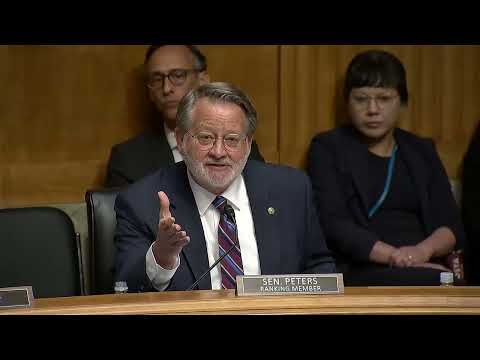
A senator asked witnesses at a Senate Committee on Homeland Security and Governmental Affairs hearing whether Congress is still functioning as a co-equal branch of government, prompting a witness to reply, "the short answer, of course, is no." The exchange centered on alleged executive usurpation of appropriations, court noncompliance, and the broader risks those trends pose to democratic checks and balances.
The senator opened by invoking constitutional safeguards — speech, religion, due process and the right to bear arms — and said the framers designed separation of powers to prevent any one branch from becoming unchecked. He asked Professor Ledewitz whether Congress currently operates as a co-equal branch and what dangers Americans should be concerned about.
Professor Ledewitz told the committee that the danger is both immediate and long term. In the short term, he said, an unchecked executive can "engage in ever more aggressive usurpation of appropriation, spending money he doesn't have, not spending money he's supposed to, violating individual rights" and undertake military actions without congressional approval. Over the long term, he warned, normalizing those behaviors erodes Congress's ability to exercise its constitutional powers in the future.
The witness pointed to recent federal decisions finding executive-branch noncompliance as evidence of the problem. He summarized judicial findings that the Department of Homeland Security had "utterly disregarded the court's earlier order," that U.S. Immigration and Customs Enforcement failed to provide court-ordered information, and that the Department of Justice had at times ignored valid court orders. He said those findings underscore the risk that if courts and Congress fail to check executive action, future presidents could exploit a new "historical gloss" that expands executive authority.
Committee members and witnesses also addressed the practical limits of judicial remedies for widespread or ephemeral constitutional violations and stressed Congress's unique tools for response. Professor Ledewitz cited the Impoundment Control Act as a historical example of Congress responding to presidential appropriation abuses and urged Congress to use existing authorities — including budgetary processes and targeted legislation — to reclaim its powers when necessary.
No formal votes were recorded during the exchange. The committee hearing continued with related testimony and questions about oversight tools and possible legislative responses.