Get Full Government Meeting Transcripts, Videos, & Alerts Forever!
Get email alerts on the Antimicrobial Resistance topic
No spam. Unsubscribe anytime.
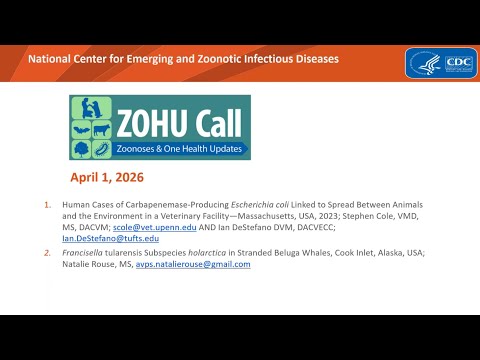
Genetically linked carbapenemase-producing E. coli found in Massachusetts veterinary hospital and three people
Summary
Genomic analysis tied carbapenemase-producing E. coli from a veterinary hospital outbreak to three human cases in the same Massachusetts region; investigators reported 19 affected canine patients, extensive environmental contamination during the outbreak, and that targeted infection-control measures reduced prevalence to zero.
A genomic investigation has linked carbapenemase-producing Escherichia coli found in a Massachusetts veterinary referral hospital to three human cases in the same county, presenters on the CDC One Health call said. The veterinary facility identified about 19 affected canine patients and high environmental contamination during a months-long outbreak; investigators reported that targeted interventions reduced laboratory-detected prevalence in patients and the environment to 0%.
The finding matters because the isolates produced New Delhi metallo-beta-lactamase (NDM-5), a subtype of carbapenemase associated with limited treatment options and hospital-associated infections in people. Stephen Cole of the Penn Vet CREATE program and Ian DeStefano, who led the veterinary investigation, described how whole-genome sequencing and public pathogen-detection pipelines linked animal, environmental and human isolates.
Investigators said clinical and environmental surveillance in the veterinary hospital found contamination of sampled surfaces as high as about 40% at peak and inpatient gastrointestinal colonization point prevalence up to about 25%. The hospital’s review of clinical cultures initially flagged an unusual carbapenem-resistant E. coli, and the outbreak eventually encompassed roughly 19 dogs with syndromes ranging from urinary tract and surgical-site infections to pneumonia and bloodstream infections; investigators reported that just under 60% of those patients survived to discharge while just under a third died or were euthanized.
"We had a human and an environmental isolate that were identical to each other, zero SNPs apart," Cole said, summarizing genome comparisons that also showed other matched isolates within nine to 10 single-nucleotide polymorphisms. Cole described testing at Penn Vet and collaboration with the Minnesota Pathogen Genomics Centers of Excellence and the Massachusetts Department of Public Health, noting that sequences were uploaded to the NCBI pathogen detection pipeline for comparison.
Massachusetts public health officials, who routinely receive and sequence human CRE isolates, interviewed the people whose isolates matched the veterinary samples and identified that each person had at least one pet hospitalized at the facility during the outbreak period. The investigators emphasized that timing of pet hospitalizations preceded the matched human positive cultures in those pairs, supporting a temporal link between facility exposures and subsequent human detection, though they cautioned that point-prevalence sampling did not always sample the pet directly.
The veterinary team described a bundle of infection-control measures used to halt spread: broad environmental decontamination, designated exam and elimination areas, flags in electronic medical records, updated patient-transport workflows, institution of PPE and staff training, and targeted screening. "With this coordinated effort, we did ultimately find success where we found both the prevalence of this NDM E. coli in our patients as well as the environment declined to 0%," DeStefano said.
In the webinar Q&A, presenters discouraged sending known CRE-positive pets to communal grooming or daycare facilities and emphasized practical home measures, including strict hand hygiene and careful handling of pet feces. They noted that counseling for owners should aim to avoid unnecessary disruption of care while reinforcing precautions for high-risk household members.
The case underscores One Health links between human and animal health and the value of combined clinical surveillance, laboratory sequencing and coordinated public-health follow-up. Presenters pointed to a recent Emerging Infectious Diseases paper documenting multiple One Health clusters nationally and urged strengthened infection-prevention infrastructure for veterinary settings. The Penn Vet CREATE program offers diagnostic testing and resources for veterinary facilities dealing with CRE, and investigators made their testing and procedural recommendations available in a published write-up and accompanying DOI listed on their slides.
The webinar hosts said slides and a captioned video will be posted on the CDC ZOHU Call page within 30 days and provided continuing-education registration instructions and contact emails for follow-up.