Get Full Government Meeting Transcripts, Videos, & Alerts Forever!
Get email alerts on the Homelessness topic
No spam. Unsubscribe anytime.
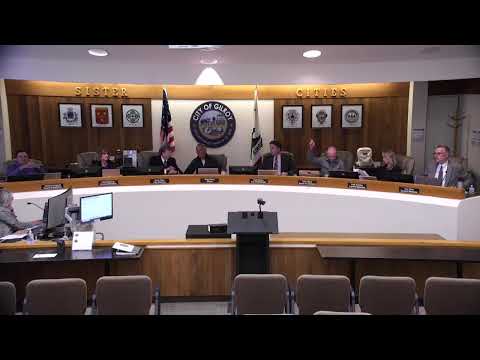
Gilroy council creates homelessness ad hoc subcommittee, OKs HomeBase facilitation amid sharp public debate
Summary
Gilroy City Council voted 6–1 to create a homelessness ad hoc subcommittee and accept a funded HomeBase facilitation proposal (up to $58,000) to convene stakeholders and develop recommendations on homelessness response and prevention over several months; the decision prompted both support and criticism at public comment.
The Gilroy City Council voted 6–1 on April 20 to establish an ad hoc homelessness subcommittee and to proceed with a HomeBase facilitation proposal funded by Destination: Home.
City Administrator Matt told the council the HomeBase proposal would fund facilitation of up to six meetings (four virtual and two in‑person) over a period determined by the subcommittee, at no direct cost to the city. The contract value cited in staff materials was up to $58,000 to support meetings, preparation and a final report.
Councilmember Klein moved to form the subcommittee; Councilmember Brocco seconded. The motion to appoint Councilmembers Brocco and Ramirez to the ad hoc passed 6–1, with Councilmember Fugazi voting no. Mayor Greg Bozzo later stated he also plans to participate in the effort.
Supporters at the meeting said a structured, data‑driven process is needed. Jan Bernstein Chargen of Pitstop Outreach told the council HomeBase brings regional expertise and data that can help craft practical recommendations, and cited recent housing placements of Gilroy residents in San Jose as an example of regional coordination.
"HomeBase has the expertise and the regional contacts," Bernstein Chargen said. "A task force makes recommendations; council will make the decisions." (Jan Bernstein Chargen)
Several public speakers urged urgency and practical outcomes. Ann Marie McCauley, a local nonprofit and business leader, said the ad hoc should center on recovery and employment pathways rather than "propagating information not backed up by facts." Melissa Santos of Community Solutions introduced her organization's behavioral‑health and housing services and offered the group as a local partner.
Opponents warned the process could become a vehicle for policies they oppose. Ron Kirkish said he opposed the HomeBase engagement and expressed concern the work would lead to more sanctioned encampments or a "pull factor" of unhoused people coming to Gilroy. "I am not for this," he said during public comment. (Ron Kirkish)
Mayor Bozzo and several councilmembers framed the HomeBase engagement as a way to bring outside expertise and to prepare the city for competitive grant applications tied to any recommendations that emerge. Councilmember Ramirez said using an established facilitator could make the city's future proposals more fundable.
The council directed staff and the appointed subcommittee to schedule the meetings in coordination with staff, and to return to council with any required follow‑up. The ad hoc will make recommendations to full council; it was not granted decision‑making authority to implement policies without council approval.
What happens next: the three appointed councilmembers and staff will coordinate scheduling and stakeholder invitations; HomeBase will provide facilitation and reporting as outlined in the funded proposal. No city match funding was required to accept the HomeBase offer, per staff report.