Get Full Government Meeting Transcripts, Videos, & Alerts Forever!
Get email alerts on the Energy topic
No spam. Unsubscribe anytime.
Kasson City Council backs pursuit of 2 MW solar and 2 MW battery system to curb rising capacity costs
Summary
Council heard a consultant-led proposal to build a 2 MW solar array and 2 MW battery at the north-side sewer-plant site, reviewed three bids and tax-credit timing, and voted to pursue the low-cost option contingent on an interconnection agreement with Excel.
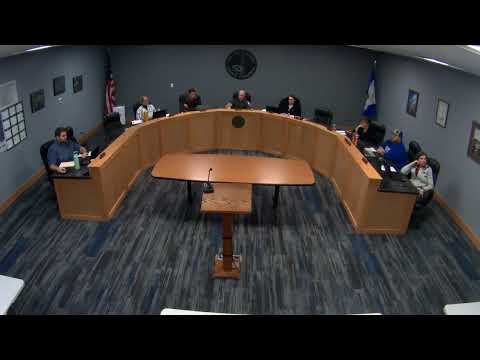
Kasson City Council on Nov. 19 heard a presentation from a consultant and city staff about a proposed local energy project that would pair 2 megawatts (MW) of solar with 2 MW of battery storage at the north-side site by the sewer plant to reduce exposure to volatile capacity-market prices.
The project was presented by Gary, a consultant working with the city's electric department, who said the market for capacity has spiked in recent years and that pairing solar with batteries and claiming current federal direct-pay tax credits is the most viable near-term option for a small municipal utility. Gary said the team received three bids, including a Tesla mega-pack option and a bid from Elm/Zagler (referred to in materials as Elm Micro Grid), and rejected a tolling arrangement because it would cost the city far more over time.
"In just last year alone we were looking at $30 a megawatt day ... and that has jumped up to over $200," Gary told the council, arguing that storage would blunt those price shocks when system generation is short. City staff said the combined low bids for battery and solar totaled about $7.3 million before grants and tax credits; after expected direct-pay credits and other support the net cost was presented as about $4.7 million with estimated lifetime savings of roughly $9.2 million.
The presentation highlighted operational limits that require an interconnection agreement with Excel to ensure the project can be safely tied to the grid. To avoid long interconnection timelines and retain available tax credits, staff recommended the city make early procurement steps (ordering switchgear/transformers) or commence limited engineering work to ‘‘safe-harbor’’ the project before rules change. Staff said the near-term risk exposure to the city for starting engineering and procurement work would be limited — roughly $100,000 in engineering fees and up to $180,000 in potential restocking charges, for a combined maximum at the time of about $280,000 if the project were later canceled.
Council members asked about certification of domestic content (which affects an extra 10% credit), the timing for installation (staff estimated both battery and solar would be installed next year), and whether the project would require exporting power onto the larger system. Gary said the proposed system is sized to be non-exporting to shorten the interconnection review with Excel and better preserve tax-credit eligibility.
After discussion, a council member moved to approve pursuing option one from the presentation — the 2 MW battery and 2 MW solar combination — contingent on a favorable interconnection agreement with Excel; the motion was seconded and passed, with one council member recorded as opposed. Staff will refine contracts, pursue the interconnection process, and return with contract documents and legal review as required.
Why it matters: the project is intended to reduce the city’s exposure to growing capacity costs, capture federal direct-pay tax credits available now, and provide a small, expandable local resource for reliability and rate stabilization.