Get Full Government Meeting Transcripts, Videos, & Alerts Forever!
Get email alerts on the Boces Capital Project topic
No spam. Unsubscribe anytime.
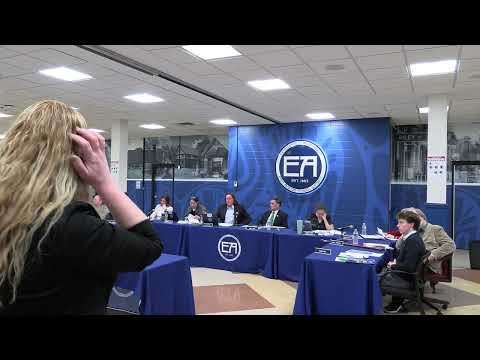
BOCES presents $49.5 million multi-district capital plan; East Aurora's share about $2.6 million
Summary
Erie 2 BOCES officials presented a $49.5 million, four-campus capital plan designed to fit within state aid limits; East Aurora's share would be roughly $2.6 million, paid in five roughly level installments beginning July 2027. Board members pressed presenters on aid timing, vote mechanics and alternates used at bid time.
Dr. David Or, speaking for the BOCES team, told the East Aurora Board the partners had narrowed a four-campus building-condition plan from an initial $142 million down to a $49.5 million "core priorities" package intended to preserve safe, secure facilities and improve functionality. "It's a pleasure to be here with the East Aurora board," Dr. David said as he opened the presentation and walked trustees through the building-condition findings and examples from the nearby Ormsby Center.
The plan focuses on envelope and mechanical needs across campuses and on program-specific fixes at Ormsby, including pavement and sidewalk repairs, welding-shop ventilation and expansion, pool infill for therapy pools, and asbestos remediation under cosmetology flooring. BOCES representatives said the scope was carefully designed so each element would fall under the state's Maximum Cost Allowance (MCA) and be eligible for building aid.
Melissa, the BOCES financial planner, described how the total would be apportioned among component districts using a resident-weighted share and showed East Aurora's allocation at roughly $2.6 million. She presented a five-payment schedule (July 2027 through July 2031) and previewed three payment options for local districts: pay-as-you-go cash, short-term bond anticipation notes, or longer-term serial debt (with examples out to 15 years and up to 30 years allowable under period-of-use rules).
Board member Dan Brunson asked a central practical question during the Q&A: "Aid for building projects comes a year after the payment is made, as I understand—would we wait a year for reimbursement?" Melissa and Dr. David answered that BOCES-style projects are aided in the same fiscal year as the payment because the aid is tied to the payment method, so districts can expect the reimbursement on the same fiscal-year cycle for these BOCES-managed projects.
Presenters stressed governance choices. The preferred route is an intermunicipal agreement (IMA) that requires unanimous consent from each component district; unanimous approval lets each district choose its own financing terms and tends to lower local borrowing cost. If unanimity fails, the BOCES could instead pursue a DASNY (state-authority) financing route that requires a public vote and typically carries higher issuance costs and less local flexibility.
Why it matters: the plan is explicitly designed to maximize state aid and smooth local payments. If East Aurora votes to join the IMA this spring, the plan's financing would begin in 2027 as presented; if not, the schedule and scope could be reconfigured and delayed pending a public vote.
Next steps: BOCES staff asked component boards to review and consider unanimous consent votes this spring; if all component districts approve, the group will file with the State Education Department and begin the technical steps needed for construction and financing.