Get Full Government Meeting Transcripts, Videos, & Alerts Forever!
Get email alerts on the Fit Tool topic
No spam. Unsubscribe anytime.
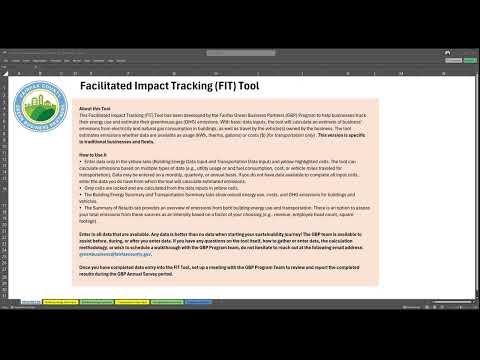
Presenter demonstrates FIT tool to help Fairfax County businesses track energy use and emissions
Summary
A presenter for the Fairfax County Green Business Partners Program demonstrated an Excel-based FIT tool that helps businesses estimate electricity, natural gas and fuel use, convert those figures to greenhouse gas emissions, and identify cost-saving efficiency opportunities.
A presenter for the Fairfax County Green Business Partners Program demonstrated an Excel-based "FIT" (Facilitated Impact Tracking) tool that helps local businesses estimate annual energy use and associated greenhouse gas emissions and identify opportunities to reduce operating costs.
The tool focuses on three main sources of emissions — electricity, natural gas and fuel used for business operations, including vehicles and equipment — and converts energy inputs into greenhouse gas estimates. The presenter said the FIT tool was built to be straightforward: with just a few basic data inputs businesses can get estimates of energy use, costs and emissions.
Why it matters: tracking energy use can reveal where businesses can lower costs and reduce emissions, and the GBP program uses that reporting as part of Fairfax County’s broader climate action goals. "You can only manage what you measure," the presenter said.
How it works: the FIT package includes two templates tailored to different business types. A "traditional" template is designed for businesses operating in shared commercial spaces that typically use company-owned vehicles; a separate home‑based template asks users to enter the percentage of a residence allocated to business use (the same figure businesses report to tax authorities) and to include personal-vehicle business travel. The presenter said inputs for buildings and vehicles may be entered individually or aggregated.
The tool’s interface is color-coded to guide users: yellow tabs are for data entry (energy usage and vehicle use), green tabs display summarized energy use and greenhouse gas conversions by category, and blue tabs provide introductory information and overview guidance. A carbon accounting guide accompanies the tool and explains greenhouse gases, common sources and the process for tracking and reporting.
Next steps: the GBP presenter said future demo sessions will walk through each tab step by step and invited attendees to contact the GBP team with questions about beginning, midstream or completed entries.
The demonstration was intended as an instructional session for Fairfax County businesses participating in the Green Business Partners program; no policy votes or formal actions were reported in the presentation.