Get Full Government Meeting Transcripts, Videos, & Alerts Forever!
Get email alerts on the Local Government Budget topic
No spam. Unsubscribe anytime.
Finance director warns PSVS revenues won't keep pace with costs; committee questions $12M transfer to general fund
Summary
Finance staff presented an auditor report with 'no exceptions noted' and projected modest sales‑tax growth; committee members pressed for details on an estimated $11.995M transfer to the general fund and on which positions and expenditures are newly proposed versus previously encumbered.
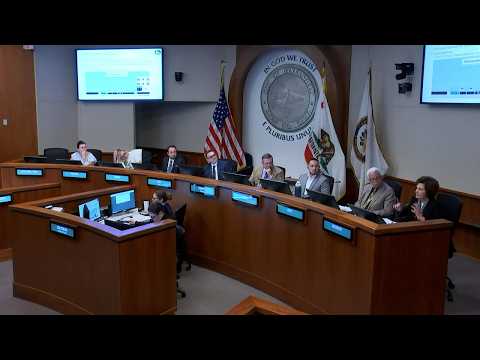
Randy McKean, finance director, delivered an update to the PSVS committee on April 9 that combined the required independent auditor’s annual report, revenue projections and staff recommendations to reduce a projected gap between PSVS expenditures and revenues.
McKean told the committee that the independent audit “did six tests” on revenues and expenditures and that the most recent annual report showed no exceptions. At the same time, staff presented a modest revenue outlook — consultants HDL project roughly 2% sales‑tax growth — and a list of cost pressures that will drive PSVS expenditures higher, including workers’ compensation, pension increases, fleet rates and negotiated cost‑of‑living adjustments.
“Expenditures are increasing higher than our revenue,” McKean told the committee, pointing to personnel projections of roughly $62.2 million (about 54% of the draft PSVS budget) and to rising pension and insurance costs. He said the PSVS fund is being used for both ongoing personnel costs and one‑time projects and that staff is proposing a multi‑year plan to reduce costs by about 17% through vacancy eliminations and reduced discretionary spending.
Staff proposed eliminating 17 vacant positions in PSVS (part of a broader plan to reduce roughly 70 vacant positions citywide), cutting discretionary contributions to outside entities by about $3.2 million, and setting aside approximately $7 million for one‑time capital projects. McKean also said prior tax‑filing errors by businesses had required the city to repay approximately two years of revenue to the county, which depressed current‑year receipts.
Several committee members challenged the practice of transferring PSVS money into the general fund without itemized oversight. Committee members said the ballot materials had emphasized public‑safety uses and asked the city to clarify the basis and frequency of the proposed $11.995 million transfer and to provide a breakdown of the one‑time operating expenditures ($12.98 million) so the committee could perform meaningful oversight.
Staff said many of the larger PSVS expenditures were previously presented and encumbered in prior budget cycles but agreed to return with a detailed breakdown of which projects are newly proposed, which are previously encumbered, and a line‑by‑line account of the one‑time operating items and the vacant positions slated for elimination.
The committee asked staff to provide those details at the next meeting to allow closer review before council decisions on the budget in May and a final balanced budget in June.