Get Full Government Meeting Transcripts, Videos, & Alerts Forever!
Get email alerts on the Facade Program topic
No spam. Unsubscribe anytime.
Redevelopment commission approves focusing on façade improvement grant pilot using $40,000 in existing funds
Summary
Pulaski County redevelopment commissioners voted to prioritize a façade improvement grant pilot, directing staff to refine rules, a scoring rubric and targeted stakeholder outreach with a goal to launch a mid‑year pilot using roughly $40,000 in redevelopment funds and grants up to $10,000 each.
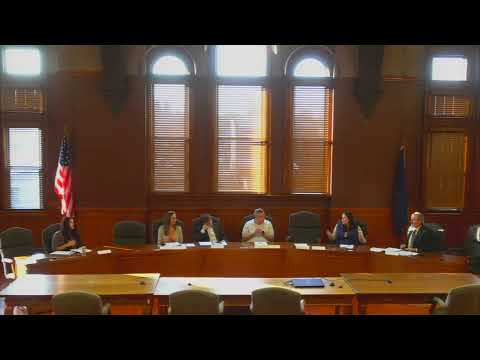
The Pulaski County Redevelopment Commission moved to make a façade improvement grant program its immediate priority and directed staff to finalize program rules, a scoring rubric and targeted stakeholder outreach for a mid‑year pilot.
A commissioner moved and a colleague seconded the action, and members indicated approval of the motion. The commission recorded roughly $40,000 available in redevelopment funds to support the pilot and discussed a maximum grant of $10,000 so the commission could award multiple projects or more awards at lower amounts.
Commissioners and staff laid out core elements and next steps: staff will draft a simple scoring rubric emphasizing visual and aesthetic impact, historic preservation and project viability; solicit targeted input from four town councils, two township trustees, two main‑street organizations, and local historical societies; and return to the commission with a refined draft at the May meeting. "For the time being the redevelopment commission is going to focus on implementing the façade improvement grant program," one commissioner said when moving the motion.
The commission agreed in principle to reimburse applicants rather than pay contractors directly and to require applicants to provide documentation such as building permits, zoning clearances and proof that the property is free of tax liens or mechanics' liens. Commissioners discussed allowing ADA improvements that affect building entries but not sidewalk work, and agreed to reserve discretion to fund or decline projects not explicitly enumerated.
Staff said tax reporting for grants will be researched further — the Crown Point program was cited as indicating grant awards may be taxable and require Form 1099 reporting — and staff will consult local CPAs before finalizing forms and applicant guidance.
Commissioners debated a lightweight subcommittee scoring approach (three redevelopment commissioners scoring with local or historic representatives providing supplemental input) to avoid frequent formal meetings while still incorporating place‑based viewpoints. They asked staff to prepare draft rubric examples and solicit feedback by mid‑May, with an aim to present the program concept to county commissioners for preliminary acceptance in May and launch a pilot by mid‑year if the governing body is amenable.
The motion does not yet adopt final program rules; the commission agreed to continue refining the application, rubric and administrative details and to return with a final vote once the full membership can review the proposed rules.