Get Full Government Meeting Transcripts, Videos, & Alerts Forever!
Get email alerts on the Municipal Budget topic
No spam. Unsubscribe anytime.
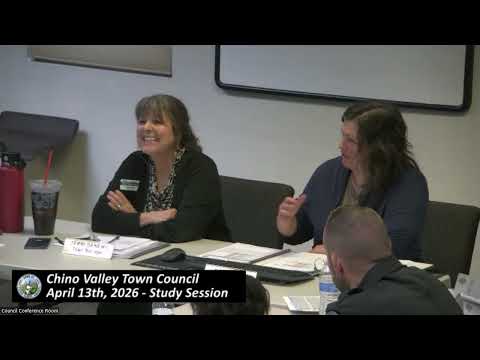
Chino Valley council reviews cautious FY 2627 budget as revenues slip and major projects loom
Summary
Staff presented a preliminary FY 2627 budget that trims spending, flags wastewater debt and a $5M water-reclamation loan, and recommends a mix of one-time projects and selective personnel adjustments amid declining state-shared revenues.
Chino Valley officials on Monday reviewed a preliminary fiscal year 2627 budget that staff said would shrink the town's recommended spending by about $4.9 million from the current year, while highlighting rising insurance costs, continuing wastewater pressures and a planned water-reclamation loan.
"We are in a financial situation where we need to be conservative and cautious," the town manager said in opening remarks, laying out the budget philosophy that guided the packet presented to the Chino Valley Town Council. Budget staff summarized the base-budget numbers and the manager's recommended adjustments at length.
The presenter told the council that mandatory changes alone left only a modest net increase, driven in part by health insurance, "our health insurance premiums, those did go up 19% this year," the budget presenter said, noting the rise was partially offset by reductions in public-safety retirement contributions under PSPRS. With recommended additions, staff said, the town's recommended budget was roughly $4.9 million below the current year but still called for spending choices and careful reserve management.
Staff projected the general fund's estimated ending cash balance would be about $6.6 million with the recommended items included, down from a base estimate of roughly $7.5 million. Officials said contingency remains set by formula (5%) and warned that the timing and size of the planned water-reclamation facility (WRF) loan will push debt-service costs higher in coming years.
Wastewater operations drew sustained attention. Budget staff described the wastewater fund as improved since recent rate steps but still vulnerable when new debt service from the WRF and other projects is added. "We're going to have to really analyze our rates," the presenter said, noting the town would continue evaluating software and rate models to react more proactively.
Major capital and one-time requests were mixed. Community services asked for $280,000 to complete park phase 1B, including pickleball courts and detention-pond work; staff indicated the park program is multi-year. Staff also flagged a potential grant-funded Pine Trail construction project that would require an approximate $155,000 local match for a $2.7 million project to cross Granite Creek Wash and complete connectivity.
On personnel, human-resources staff proposed a 2% cost-of-living adjustment (about $224,294) and a merit pool up to 1% (~$110,113). The police department requested a 3% market adjustment (about $103,180) to remain competitive while budget staff recommended freezing three vacant positions for FY 2627 (a plans examiner, one police officer vacancy and a streets maintenance position) to limit near-term costs. The chief urged caution about freezing posts, warning of retention risks: the department reported roughly 3,840 traffic stops year-to-date and about 70 DUI arrests.
Staff also told the council that the town's portion of the Yavapai Combined Trust reserve shortfall was $222,211.97 and that the trust adopted a two-year restoration plan with payments due July 31, 2026 and July 31, 2027. Separately, staff recommended continuing an annual PSPRS unfunded-liability payment with the base amount budgeted at $250,000; the town's unfunded liability was reported just under $1.5 million.
Information-technology requests highlighted ongoing contract increases and recommended cybersecurity investments, including stronger email filtering, immutable backups and an intrusion-detection capability. IT staff said they would explore lower-cost or partner options and could return with alternatives if appropriate.
Staff identified a favorable demo vacuum-truck purchase that could avoid carrying a full $500,000 unit in next year's budget if approved at an upcoming meeting; public-works staff also recommended an $11,000 assessment to support a regional water facilitation effort if partner jurisdictions proceed.
Council members asked for more detail on revenue projections and suggested staff return with line-item revenue breakdowns. The presenter closed by laying out next steps: additional information and some items will be brought back May 27; tentative budget adoption was scheduled for May 26 (staff stressed tentative adoption sets an upper limit and may only be lowered later), with final public hearings and adoption planned for late June.
The council did not adopt a final budget at the meeting; members provided guidance on which items to prioritize, which to re-examine (including Yavapai transit funding and a proposed intrusion-detection tool), and where they wanted staff to return with more detail.