Get Full Government Meeting Transcripts, Videos, & Alerts Forever!
Get email alerts on the Cultural Policy topic
No spam. Unsubscribe anytime.
Sponsor urges unified indigenous‑language spelling in law; colleagues raise implementation and legal concerns
Summary
Bill 218 would standardize government spelling of the indigenous name across statutes and publications. Sponsor framed the change as cultural preservation; colleagues flagged administrative, legal and implementation ambiguities and asked for the sponsor and the compiler to confer before resuming debate.
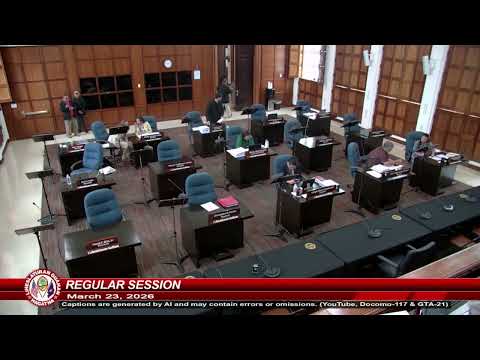
Senator Cavo Mu introduced Bill 218-38, a measure to standardize the official spelling of the indigenous name used in government publications and statutes. The sponsor framed the bill as cultural preservation and a way to provide clarity across education, tourism and government communication.
Sponsor remarks focused on identity and stewardship: "This measure asks us to bring that clarity… It asks us to affirm in a unified and deliberate way the use of [the spelling] across all government, laws, documents and communications," the sponsor said, arguing the change would reduce confusion and strengthen cultural teaching.
Multiple senators supported the cultural intent but raised practical concerns about implementation, administrative cost and legal ambiguity. The compiler (office responsible for statutory codification) submitted commentary (summarized in floor remarks) noting potential vagueness, the risk of inconsistent application, and that significant discretion to revise codified language could raise separation‑of‑powers questions and create unintended legal inconsistencies (for example, in court decisions, historical documents, and existing settlement agreements). A floor amendment was proffered to remove sections giving broad authority to the compiler and to narrow the bill’s scope; the sponsor and amendment proponent were directed to confer and the chamber recessed for lunch to allow negotiation.
Outcome and next steps: Floor debate paused for a lunch recess with an instruction that the bill sponsor and amendment proponent consult. No final vote or amendment disposition was recorded in this session.