Get Full Government Meeting Transcripts, Videos, & Alerts Forever!
Get email alerts on the Campus Access Town Halls topic
No spam. Unsubscribe anytime.
Rep. Frederick’s bill would require public campuses to make space available for town halls
Summary
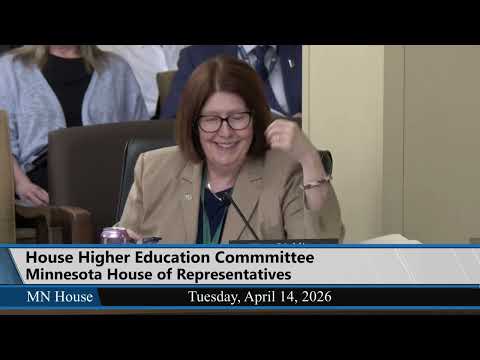
Rep. Cedric Frederick introduced House File 4479 to require public postsecondary institutions to provide appropriate, nondiscriminatory space for elected officials’ town halls (not campaign events). Testimony stressed openness and neutral moderators; members debated fees, parking and security. The bill was laid over.
Representative Cedric Frederick introduced House File 4479, which would require state-supported colleges and universities to make ‘‘reasonable and appropriate’’ space available for elected officials to hold town halls and other noncampaign public conversations. Frederick told the committee the goal is to remove cost and process barriers that can prevent constituents from meeting their representatives in public settings.
Minnesota State University Mankato professor Jim Demick, a self-described "town hall geek," testified in support and urged the committee to treat town halls as deliberative public forums rather than partisan rallies. "First and foremost, it has to be public and it has to be open," Demick said, listing three elements he said define a town hall: public openness, a neutral moderator, and genuine two-way dialogue between officials and community members.
The bill’s sponsor and supporters framed the proposal as promoting civic engagement and increasing residents’ access to campuses. Advocates suggested limiting fees to actual costs (janitorial, security) and said campuses’ ADA accessibility and neutral settings make them useful venues for wide public participation. Representative Klevorn noted that campus facilities can be more accessible and culturally appropriate than some municipal venues and urged the committee to consider community benefits beyond legislative convenience.
Several members raised concerns about statutory micromanagement of campus operations and whether the bill would give elected officials special treatment. Representative Scott described his own experience being told he was "not welcome back," which motivated the bill, but other members said campuses routinely charge fees to cover expenses and that parking often funds enterprise services. A Minnesota State representative identified in testimony as Mr. Nolan told the committee that typical room rental fees vary by campus and room type and that smaller rooms can be discounted (he cited examples in the low hundreds of dollars), adding that campuses set those rates to cover costs.
Members also pressed about dispute resolution over requested room size and whether security costs would be required; Representative Frederick said the draft directs a good-faith partnership between an elected official and the campus to identify an appropriate space but does not require campuses to provide a larger room if none is available, and that security funding is not mandated by the bill.
The committee treated the measure as a work in progress, with members urging clarification on fee caps, parking treatment, and how to avoid creating the appearance of partisan advantage. No final action was taken; House File 4479 was laid over for further consideration.
Ending: The committee closed the item without a vote on final passage and laid House File 4479 over for future work, with members asking staff and the author to refine language on fees, parking and dispute resolution.