Get Full Government Meeting Transcripts, Videos, & Alerts Forever!
Get email alerts on the Sports Betting Regulation topic
No spam. Unsubscribe anytime.
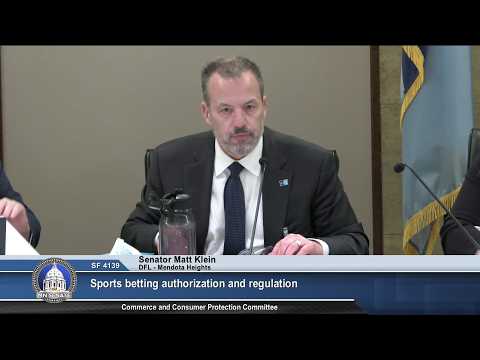
Lawmakers hear competing arguments on legalizing and regulating online sports wagering
Summary
The Commerce Committee held an informational hearing on a bill to legalize regulated online sports betting, with tribal leaders, industry groups and regulators arguing regulation would protect consumers and generate revenue while advocates and some senators warned of increased problem gambling and financial harms.
The Minnesota Senate Commerce Committee conducted an extensive informational hearing on proposals to legalize and regulate online sports wagering, drawing sharply contrasting testimony from tribal leaders, industry representatives and public‑health advocates.
Proponents — including representatives of the Sports Betting Alliance and executives from major operators — said a regulated market would provide consumer protections absent in offshore sites, deliver tax revenue and enable enforcement. Cameron, identified as a policy director for the Sports Betting Alliance, told the committee a regulated framework could require a 21‑year age minimum, geo‑location, deposit and wagering limits, and self‑exclusion tools. "This bill brings activity into a regulated system that protects consumers, respects tribal sovereignty and delivers tax revenue and accountability to the Legislature," he said.
Tribal gaming representatives told the panel they favor a regulated, tribal‑led approach that would provide oversight and revenue to tribes and the state. Andy, who identified himself as the executive director of the Minnesota Indian Gaming Association, said tribes have worked with stakeholders to develop rules designed to protect consumers and public health.
Opponents and public‑health witnesses, including Rebecca Doll Hunt of Minnesota Family Council, warned legalization risks increasing problem gambling and shifting money out of Minnesota households to out‑of‑state corporate operators. Several senators cited recent research and media reporting suggesting legalization has been followed in some jurisdictions by adverse financial outcomes for some households. "Studies suggest average bankruptcy rates and debt metrics worsen after legalization in some states," said Senator Duckworth, citing research discussed in the hearing.
Industry witnesses disputed the claim that legalization inevitably increases problem gambling, saying studies show the prevalence of severe gambling disorder remains in a steady range and a regulated market better enables prevention and treatment. Scott Ward of industry testimony told members that geo‑location data shows hundreds of thousands of attempted transactions from Minnesotans on legal platforms in neighboring states, and that channeling activity to a regulated market would allow consumer safeguards to be enforced.
The hearing did not produce a committee vote on legalization; senators said the discussion was part of a broader session‑long debate on the proper regulatory approach. Committee members asked about enforcement, the effect on illegal offshore operators, youth access and tax apportionment. Several members said they remain undecided and want more data on problem‑gambling treatment funding and the behavior of illicit sites once a regulated market exists.
The informational hearing will inform later substantive committee work and bill drafting; proponents and opponents signaled continued engagement as the Legislature considers whether to legalize and how to structure oversight.