Get Full Government Meeting Transcripts, Videos, & Alerts Forever!
Get email alerts on the Gambling Regulation topic
No spam. Unsubscribe anytime.
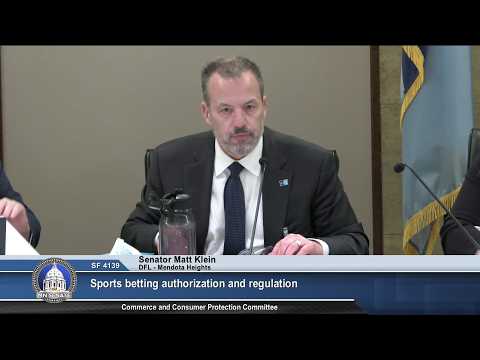
Senate committee backs bill to classify many online "prediction markets" as illegal betting
Summary
The Commerce Committee recommended passage of a bill that would treat a wide set of online 'prediction market' contracts as unlawful bets, closing a perceived loophole in Minnesota gambling law and giving regulators new enforcement tools; the measure moves to Finance.
The Minnesota Senate Commerce Committee voted to recommend passage of legislation that would clarify many online "prediction markets" are unlawful bets under state law and subject operators to criminal penalties. The measure was advanced to the Finance Committee after proponents argued it would close a loophole used by offshore platforms to offer sports and political wagers.
Senator Marty, the bill sponsor, told the committee he introduced the change because some platforms use contract language to call wagering "futures" rather than bets. "They're taking futures contracts and turning them into bets on everything — sports, politics, disasters — and that is a violation of our gambling laws," he said, arguing the bill simply clarifies existing law and provides enforcement authority.
Advocates for the bill, including Annette Meeks of Citizens Against Gambling Expansion, urged quick action. Meeks told the panel the largest prediction‑market platforms operate "virtually unregulated" and allow 18‑year‑olds to wager on events tied to sports and elections. "These sites offer no state consumer protections and pay no state taxes," she said.
John, identified in testimony as director of Minnesota Alcohol and Gambling Enforcement, described enforcement challenges and said investigators have identified thousands of offshore sites available to Minnesotans. He warned of manipulation, insider trading and the difficulty of policing operators whose servers, owners or bank accounts are outside U.S. jurisdiction.
Committee members asked how the bill would differ from federal futures or commodities regulation; counsel and witnesses said courts in other states are still resolving the boundaries between futures trading and gambling and that the bill seeks a clear state‑law definition for enforcement. Supporters said the proposal would make facilitation a felony in defined circumstances and give regulators and prosecutors tools to pursue operators who target Minnesota consumers.
The committee adopted the motion to recommend the bill to pass and referred it to the Finance Committee. The next step for the measure is consideration in Finance; proponents said they will continue working on technical language and any conforming edits that judges or counsel recommend.
The committee hearing also included a wider conversation about overlapping proposals to regulate online wagering and the distinction between legal futures markets and consumer‑facing prediction platforms.