Get Full Government Meeting Transcripts, Videos, & Alerts Forever!
Get email alerts on the Graffiti And Code Enforcement topic
No spam. Unsubscribe anytime.
Greensboro commission upholds two graffiti notices after owner says he permitted artwork
Summary
The Greensboro Minimum Housing Standards Commission on March 18 upheld notices of violation for graffiti at two downtown properties after code inspector testimony and owner Sydney Gray’s claim that he had given permission for the artwork; commissioners said the ordinance requires property owners to remove graffiti or face city abatement.
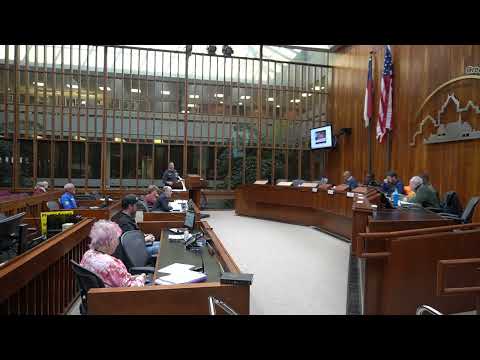
The Greensboro Minimum Housing Standards Commission on March 18 upheld notices of violation for graffiti at two downtown properties after hearing testimony from city code inspectors and an extended presentation by property owner Sydney Gray.
City code compliance supervisor Matthew (Matt) Peele told the commission he inspected the properties in November 2025 and again in late January 2026 and that photographs included in the hearing packet and displayed in the meeting room showed painted or otherwise marked graffiti at the addresses. ‘‘Yes,’’ Peele testified when asked whether graffiti had been present at each visit and on the day of the hearing.
City counsel framed the legal question for commissioners: under the City of Greensboro nuisance chapter and code section 18‑8, ‘‘drawings, writings, [or] other markings done without the permission of a property owner’’ qualify as graffiti and may be treated as a nuisance. Counsel told the commission that, if the commission upholds a notice, ‘‘the property owner’’ is required to remediate the condition and, if the owner fails to do so, the city can abate the nuisance and charge the owner.
Gray, the owner or manager associated with several notices, told the commission he has previously appealed multiple related cases and that earlier hearings were withdrawn or cancelled. Gray said he had given ‘‘temporary permission for the artwork on my property’’ and repeatedly described himself as ‘‘the victim’’ of repeated graffiti, adding that he had removed markings several times. He also urged the city to use cameras and criminal enforcement rather than requiring owners to clean up repeated graffiti.
City counsel and commissioners limited the hearing to the question before the commission — whether graffiti was present on the private building exteriors cited in the notices — and repeatedly objected to material they considered outside that scope (for example, photographs of city‑owned trash cans and other city or third‑party property). Gray’s wife, Ruth Gray, added that some items shown in earlier exhibits were not on the couple’s building but on city or third‑party property.
After closing the public hearings for each property, the commission moved and voted to uphold the inspector’s notices of violation. Commissioners reading the findings cited service of notices, multiple inspections documenting graffiti, and the governing nuisance code as the rationale for their decisions. Commission and staff comments reiterated that the practical effect of upholding a notice is to require the property owner to remove the graffiti; if the owner does not comply the city may abate and recover the cost.
The commission’s action resolves the appeals on the record; staff advised that, going forward, code compliance will pursue abatement if owners do not remediate and that owners face the civil remedies available under the municipal nuisance process rather than criminal enforcement options handled by other agencies.
What’s next: the owner may cure the cited conditions or the city may proceed with abatement and cost recovery; the commission’s written findings and the notices remain part of the administrative record.
(Reporting note: this report uses ordinance citations and quoted language that were read into the record by city counsel and by witnesses during the March 18 hearing.)