Get Full Government Meeting Transcripts, Videos, & Alerts Forever!
Get email alerts on the Education Climate Curriculum topic
No spam. Unsubscribe anytime.
Student advocates win board approval for environmental literacy resolution after heated debate
Summary
After extensive student testimony and trustee debate, the Placentia‑Yorba Linda Unified School District board approved Resolution 25‑30 to advance environmental literacy and sustainability in district curricula and operations, adopting an 18‑month progress check and local implementation focus.
The Placentia‑Yorba Linda Unified School District Board of Education voted April 14 to adopt Resolution 25‑30, which calls for the district to integrate environmental and climate literacy into curriculum, encourage student‑led sustainability initiatives, and report back on progress in 18 months. The motion passed 3–2, with an abstention vote recorded as an “I” from the student board member.
Student members of the PILUSD Climate Coalition and more than a dozen student speakers provided the board with research, survey results and endorsements. "We collected over 450 student endorsements and more than 1,600 community endorsements," said student speaker Avery, urging trustees to adopt the resolution to prepare students for a changing economy and future careers in clean technology. Other student speakers described classroom surveys showing high concern about climate change and asked the district to provide updated instructional content and community partnerships.
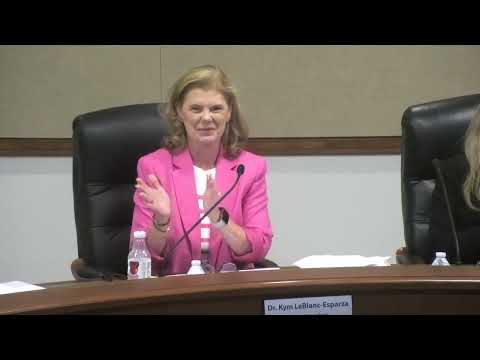
Superintendent Dr. Kim Leblanc Esparza told trustees she met with student leaders and used their proposal as the foundation for a locally focused draft that narrows global advocacy to items within the district’s purview. "I used the students’ work as a draft and tried to make it something actionable for our community," she said, adding the draft was refined to emphasize curriculum integration, professional development and measurable, school‑level practices.
Several trustees expressed support for student civic engagement but differed over whether a district‑level resolution was the appropriate vehicle. One trustee said she feared opening the door to district endorsement of student‑led ideological positions, arguing that site‑level initiatives or classroom projects could accomplish similar goals without a board statement. Other trustees countered the resolution is nonbinding policy language focused on curriculum and career pathways, not a mandate to adopt specific external policies.
The adopted resolution directs district staff to encourage climate‑related curriculum integration, student engagement opportunities, partnerships with community organizations and sustainable campus practices, and to report back to the board in 18 months on implementation progress. Superintendent Leblanc Esparza said the district will return with a plan that aligns to the board’s direction and noted local emphasis in the final language.
The vote followed robust public comment from parents and students: some speakers urged passage as a way to address student anxiety about climate change and to create pathways into green careers; others urged caution about district‑level advocacy. The board’s approval gives staff direction to begin program planning and to report outcomes on a set cadence, with the 18‑month check serving as the first formal update.
The board did not adopt any binding budget allocations in the resolution; implementation details, required staffing or potential costs will be brought forward to the board for consideration as part of standard budget and planning cycles.