Get Full Government Meeting Transcripts, Videos, & Alerts Forever!
Get email alerts on the Lcap Local Indicators topic
No spam. Unsubscribe anytime.
Director John Matos says district met state local-indicator standards, flags equity work ahead
Summary
John Matos, director of Digital Services, presented New Haven Unified’s local indicators self-assessment, reporting the district ‘met’ basic conditions, standards implementation, family engagement, school climate and access to a broad course of study while noting continued work on health education, VAPA and AP enrollment disparities.
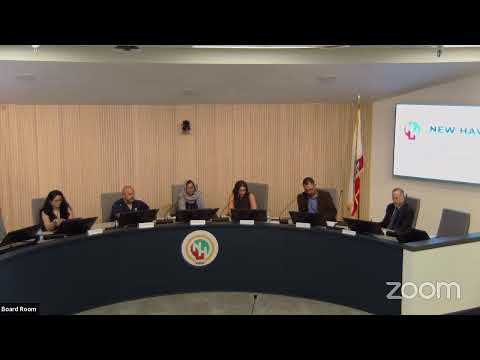
John Matos, director of Digital Services for New Haven Unified, presented the district’s Local Control and Accountability Plan local indicators self-reflection at the board’s June 18 meeting, saying the district has “met our basic conditions” and has reported its results to the state dashboard portal.
Matos described the local indicators as district-level measures that supplement state dashboard data and said the district met standards for credentialing, instructional materials and facilities; he added there were no Williams complaints this year. “All of our staff and students have the appropriate instructional materials and we are supporting our teachers,” Matos said.
On academic-standards implementation, Matos said the district has provided professional development and recently adopted new science and history curricula. He noted strengths in physical education and world-language implementation but said the district will pay more attention to health education and visual and performing arts (VAPA) in coming years.
Matos described family engagement structures—including family-school associations, equity councils and Latino parent groups—and said the district continues efforts to reduce language barriers to participation. On school climate, Matos said annual surveys show students generally feel safe and that the district is pursuing strategic-plan initiatives to improve whether students ‘‘want to come to school regularly.’’
On access to a broad course of study, Matos said the district has used an Equity Report Card to examine participation in advanced programs and is targeting outreach at the high-school level because AP enrollment “does not mirror 100%” of the district’s overall demographics. Vice President Kumar asked whether there were big year-over-year differences; Matos said the most notable change was recent instructional-material adoptions and that student-survey results were otherwise consistent.
The board received the presentation and had no further substantive debate on the item. Matos said staff will update the dashboard portal in the coming week to reflect the self-assessment results.