Get Full Government Meeting Transcripts, Videos, & Alerts Forever!
Get email alerts on the Emergency Response topic
No spam. Unsubscribe anytime.
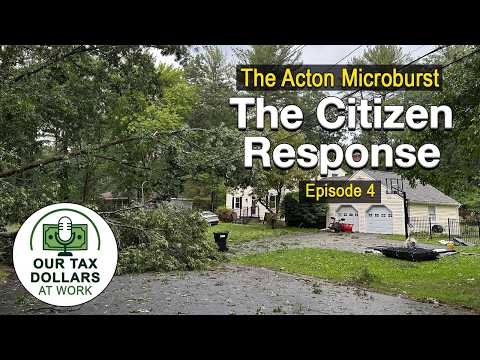
Residents recount sudden Sept. 8 microburst that felled trees, cut power and blocked roads in Acton
Summary
On Sept. 8 residents described a sudden microburst that toppled trees onto roads and power lines, disrupted school dismissals and strained emergency response; neighbors and town crews mobilized, and locals urged better communications and targeted infrastructure upgrades.
A sudden wind event on Sept. 8 left large trees down across roads in Acton, cut power to neighborhoods and forced schools to delay student dismissals, residents said in a podcast episode recalling the incident.
“A grabbed my iPhone ... I'm fairly certain we're going to lose some trees,” said a resident of Forest Road describing backyard footage taken as trees bent 30–40 degrees before falling. The resident said four trees fell across the street — three onto the roadway and one onto power lines — leaving Forest Road impassable and blocking a car beneath downed wires.
Other residents described narrowly escaping injury and difficulty reaching emergency help. “I pushed 911, no response,” one resident said, later adding that it took about 45 minutes to get through to public safety and report live wires on the street. Another recalled being struck by branches and then injuring themselves while exiting a car amid downed electrified lines.
School safety became an immediate concern. One parent said school officials decided not to release students onto streets with active hazards, instead delaying dismissals until safe routes could be established. Neighbors created alternate paths and directed students home, and families shared generators and shelter while roads and lines were cleared.
Town crews and utility workers responded: DPW equipment and front‑end loaders were used to push tree debris off roadways, while utility crews handled lines where trees struck poles. Residents praised the coordinated effort by police, fire, tree crews and DPW in restoring limited passage and starting recovery work.
The episode's guests urged targeted preparedness and infrastructure improvements. One longtime resident recommended prioritizing protections around schools, houses of worship and other high‑traffic sites and proposed burying utility lines in the most vulnerable corridors to reduce the risk of live wires when trees fall. He also noted seeing “about 30 utility poles that are either tipped toward a home or into the road,” underscoring local concern about pole stability.
Residents and a police department representative also highlighted communications shortfalls and upgrades. A police officer who spoke on the episode said large outages generate heavy demand on dispatch and that reducing noncritical calls helps clarify priorities; the officer added the department is upgrading radio systems and other communications tools. Multiple residents suggested townwide alerting via text messages to reach cell phones rapidly during sudden events.
The episode emphasized two recurring themes: the community’s rapid, informal mutual aid — neighbors directing traffic, creating safe walking routes and sharing power — and the limits of formal systems during a sudden, localized disaster. Guests framed the experience as both a demonstration of civic resilience and a set of practical lessons about where to focus planning, budget and communication improvements.
The podcast did not record formal town actions, votes or pledges; guests called for further discussion and targeted investments. The most immediate next steps described on the episode were town communication upgrades under way and continued community conversations about prioritizing undergrounding and other mitigation measures.