Get Full Government Meeting Transcripts, Videos, & Alerts Forever!
Get email alerts on the Library Levy topic
No spam. Unsubscribe anytime.
Seattle committee reviews results of 2019 library levy as city prepares 2026 renewal
Summary
Seattle officials reviewed how the 2019 library levy funded collections, building repairs, technology upgrades and expanded hours, and previewed priorities for a proposed 2026 renewal. Presenters said collections grew to about 2.9 million items and the levy funds roughly one-third of library operating revenue.
Seattle’s Select Committee on the Library Levy on March 11 heard a condensed briefing on how the 2019 levy dollars were spent and what gaps remain as the city prepares a 2026 renewal. Chair Maritza Rivera opened the meeting and said the purpose was to “show our work” to taxpayers and ground council deliberations on the levy’s seven-year investments.
Tom Fay, chief librarian for the Seattle Public Library, told the committee that the system’s collections increased from about 2.4 million items to about 2.9 million during the levy period, with roughly 2 million physical items and 1 million digital items. "We've grown our collections from 2.4 million to 2.9 million," Fay said, and presenters noted expanded language collections and ongoing digitization of special materials, including a large Paul Dorpat donation now being digitized.
Rob Gannon, director of administrative services, presented the FY2026 totals: a $102.5 million operating budget and a $2.6 million capital budget. He said the general fund supplies about 58% of the budget while the current levy contributes about one-third of overall library funding. The committee was shown a category breakdown the levy has funded: hours and access, books and materials, technology and online services, helping children, building maintenance and administration/central costs.
On capital work, presenters cited seismic retrofits and renovations as levy accomplishments: the Green Lake seismic retrofit completed in 2025 and ongoing work at the University Branch expected to finish later in the year. Fay described routine and major maintenance across 26 branches, ADA improvements, electrification projects and the installation of air conditioning at 22 locations.
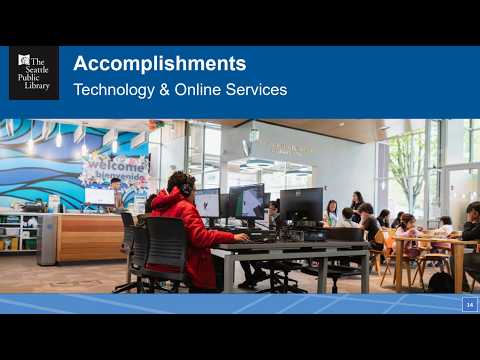
Rick Sheridan, the library’s technology lead, said levy resources helped expand public access to computers, Wi‑Fi, hotspot lending and a new mobile app (downloaded more than 25,000 times). He also described cybersecurity staffing and network upgrades instituted after a 2024 ransomware incident and said the library plans to launch a new integrated library system later in 2026.
Presenters highlighted access and service changes tied to the levy: the levy funds about 25% of library positions and helped stabilize systemwide hours (1,398 hours per week, up from 1,377 in 2019). The library discontinued overdue fines early in 2020; staff said that change returned access to thousands of patrons and did not reduce returns. Tom Fay and councilmembers said the system added 24/7 holds pickup lockers at seven locations, automatic renewals for items without holds and nine levy-funded security officer positions.
Kay Tang, director of library experience and engagement, described the “Helping Children” levy category, which funds Kaleidoscope Play & Learn sessions. Tang said the program runs about 300 sessions a year with roughly 7,000 participants and is prioritized for communities facing systemic barriers.
Councilmembers used the briefing to press for specifics. Councilmember Juarez asked about program start dates, outreach and how to publicize library services in council newsletters; staff offered to provide newsletter-ready materials. Juarez and others discussed donations and the role of Friends of the Library groups in accepting and redistributing donated books. Councilmember Saka outlined three review priorities for the 2026 levy: advancing digital equity (broadband and digital skilling), expanding access to arts and cultural experiences, and addressing backlog capital maintenance such as seismic and HVAC upgrades at historic branches including West Seattle.
The committee did not take votes at the March 11 meeting; Rivera said this session was a preparatory overview ahead of a March 25 meeting when the executive and library team will present the proposed 2026 levy package. The committee adjourned at 10:35 a.m.