Get Full Government Meeting Transcripts, Videos, & Alerts Forever!
Get email alerts on the Budget Staffing topic
No spam. Unsubscribe anytime.
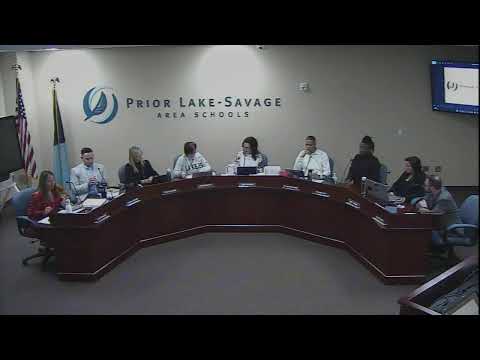
Prior Lake-Savage board approves staff reductions after heated debate over classroom and program cuts
Summary
After hours of debate and public comment, the Prior Lake-Savage Area Schools board approved a resolution to reduce and discontinue multiple positions and programs as part of preliminary FY27 budget balancing; members and residents clashed over impacts to classrooms, choir, immersion and student supports.
The Prior Lake-Savage Area Schools Board of Education voted April 13 to approve a resolution reducing and discontinuing a series of district positions and programs as part of preliminary fiscal year 2027 planning.
Administrators told the board the cuts were driven by declining enrollment, contractual seniority obligations and budget shortfalls. Director Kern, who presented the staffing resolution, said the list reflects where reductions ‘‘ultimately land’’ after placement rules and collective-bargaining obligations are applied, and that the process purposely seeks to place affected staff into open roles when possible.
The board’s discussion was long and at times sharp. Director Atinson said the proposal ‘‘misaligned’’ with previously stated board budget priorities to protect classroom staffing, arguing the package puts instructional positions and arts programs at risk. ‘‘When we cut classrooms, it’s our students and our teachers who pay the price,’’ Atinson said.
Several board members said they had pushed administration to find alternatives but said options were limited. Director France warned that the district is operating with lean reserves and that nearly every additional reduction will affect student services: ‘‘You are going to hurt a student's outcome in some way or another,’’ she said. Director Mason pressed for clearer linking of specific reductions to program changes and asked administrators to make program impacts transparent to families.
Public comment prior to the vote underscored community concern. Parent Don Leno praised one probationary teacher who he said ‘‘made my 11‑year‑old like going to school’’ and urged the board to consider community impact before finalizing non‑renewals. A second, emotional commenter addressed the board with profanity and anger, calling elected members ‘‘smug’’ as he urged the community to act.
Administrators and board legal counsel repeatedly noted that statutory rules and seniority determine where reductions occur and that nonrenewal or unrequested leave outcomes for some staff stem from those processes. The administration said some positions identified in program lists are not eliminated in name but will be restructured or delivered differently.
By roll call the board approved the resolution. The action authorizes the district to proceed with placements, unrequested leaves of absence (ULAs) and nonrenewals as outlined in the staffing packet; administrators said further personnel-level steps will follow under HR and bargaining‑unit processes. Several board members urged continued community engagement on long‑term solutions, including advocacy for increased state and federal special‑education funding.
The resolution does not itself restore any position; administrators said some positions could be reinstated if future funding (for example, a Title grant or other revenue) is approved. Board members said final line‑item budget adoption remains scheduled for June, when the district will present the compiled FY27 revenue and expenditure totals.
The meeting closed with directors offering condolences to affected staff and renewed calls for the community to participate in the upcoming levy survey and other budget conversations.