Get Full Government Meeting Transcripts, Videos, & Alerts Forever!
Get email alerts on the Career Technical Education topic
No spam. Unsubscribe anytime.
School committee approves one‑year pilot with New England Institute of Technology for select Smithfield students
Summary
Smithfield School Committee approved a one‑year pilot contract with the New England Institute of Technology allowing a small number of high‑school students to pursue workforce‑focused coursework on a trimester schedule; the committee added an amendment to investigate prorating tuition based on enrollment.
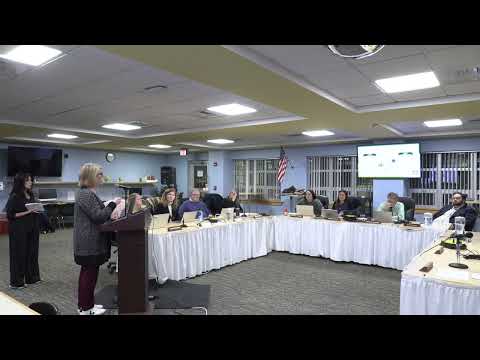
The Smithfield School Committee voted March 5 to approve a one‑year pilot contract with the New England Institute of Technology (NEIT) to allow a limited number of Smithfield High School juniors and seniors to take applied, career‑focused courses beginning July 1, 2026.
Staff introduced the proposal and said the initial contract term runs from July 1, 2026, through June 30, 2027, explicitly labeling the effort as a pilot that the district can end or extend after the year. “We have Laura Deuio and principal Kristen Ward to talk about an opportunity for a select handful of students,” the staff member said when introducing the presenters.
Laura Deuio, who presented participation and enrollment history, said NEIT’s program is small in scope at present: “Currently we have nine students participating in the Running Start program at CCRI; we have five students interested in the NEIT program for next school year,” Deuio said. She noted Running Start enrollment rose from four students in 2023–24 to nine in 2025–26 and that final application counts will be known after the May 18 deadline.
Principal Kristen Ward described the programs’ different aims: NEIT offers hands‑on, industry‑aligned training intended for students aiming to enter the workforce or pursue applied two‑year credentials, while CCRI’s Running Start provides transferable college credits and a stronger pathway to four‑year institutions. “NEIT is for students seeking immediate workforce entry,” Ward said, adding that NEIT credits generally do not transfer to public institutions and therefore do not qualify for the state’s Rhode Island Promise tuition support.
The presenters reviewed costs and program logistics: CCRI courses cost roughly $2,700 per semester, while NEIT’s trimester schedule results in about $1,000 per term and roughly $3,200 for the full year, though the district said it does not yet have firm book‑cost figures for NEIT. The committee also heard that the district is changing how it covers books: until now the district covered many course books but will narrow that practice to required courses tied to graduation; other course materials would be the student’s responsibility. Staff emphasized the district is not required to provide transportation for either program.
Committee members pressed on eligibility safeguards. Suggestions and conditions discussed included establishing minimum GPA and attendance standards, monitoring student performance while off campus, capping the number of participants to protect the district budget, and ensuring communication channels with post‑secondary partners so students can be returned to the district if they are not successful. One member proposed a 3.0 GPA floor; NEIT’s published guidance recommends 2.5.
Because the NEIT contract involves district funds, the motion to approve included a one‑year term and an amendment requiring staff to investigate prorating tuition costs based on enrollment patterns. A committee member moved to approve the contract “with the amendment that we will investigate the opportunity to prorate the tuition cost based on enrollment stats,” the mover said; the motion was seconded and approved by voice vote.
What’s next: district staff will finalize the contract language to reflect the book‑coverage policy, attendance and GPA eligibility criteria, and the added language directing staff to investigate tuition‑proration options. The district will report final application and enrollment numbers after the May 18 application deadline and will treat next year as a pilot to be evaluated before any multi‑year commitment.