Get Full Government Meeting Transcripts, Videos, & Alerts Forever!
Get email alerts on the Ambulance Regulation topic
No spam. Unsubscribe anytime.
Mobile council hears ordinance to tighten ambulance oversight, require certificates and monthly BLS data
Summary
The council reviewed Ordinance 06018 to consolidate basic life-support (BLS) ambulance providers under one code, require certificates of necessity for BLS companies and monthly data reporting to Mobile Fire/Rescue. Officials said the change is aimed at accountability and measuring system demand rather than pushing providers out of business.
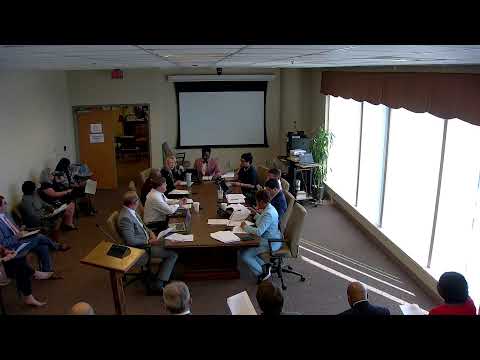
Members of the Mobile City Council spent part of their April 14 pre-meeting discussing Ordinance 06018, an amendment to Chapter 6 of the City Code that would change how ambulance and other medical-transport services are regulated.
Chief Warrior, speaking for Mobile Fire/Rescue, said the ordinance would bring every BLS provider under a single standard, require each to hold a certificate of necessity and require monthly reporting of operational data so the city can measure system demand. “This amendment is not intended to push anybody out of business,” the chief said. “Instead, it ensures that all providers are meeting the current 2026 standards and not operating under outdated decades-old rules.”
A council member asked for examples of a situation that would trigger an exemption to the certificate requirement. Administration described “major incidents” — mass-casualty events, severe weather that overwhelms resources, or industrial accidents — as circumstances that could require outside resources and justify different operational responses. The official said the certificate-related provisions are meant to be activated when the city’s emergency system is overwhelmed and additional units are needed from state or federal partners.
Chief Warrior emphasized data collection as a core goal: “We cannot improve what we don’t measure,” he said, adding that any collected data would be controlled, protected and reviewed by MFRD leadership. He said that better reporting would give council members objective numbers to consider if another certificate of necessity (CON) request appears, rather than rely on informal impressions.
Council members praised the data-driven focus. One member said the change creates a “level playing field” and allows periodic re-examination of certificates rather than leaving them in perpetuity. Council discussion noted combined BLS response reliability currently at about 99 percent. Council members also acknowledged that “not everybody’s 100% on board” with the ordinance and asked staff and provider representatives to identify outstanding concerns.
What’s next: The ordinance was introduced for consideration. Council members asked for clarifications about exemptions and provider concerns; staff and affected providers were asked to continue working with administration before the ordinance returns for further action.