Get Full Government Meeting Transcripts, Videos, & Alerts Forever!
Get email alerts on the Civil Police Accountability topic
No spam. Unsubscribe anytime.
Sheriff Nieto defends limited cooperation with ICE; board opens follow-up review and requests staff report
Summary
Sheriff Tina Nieto returned to the board to provide additional detail about 2025 TRUTH Act report figures and the legal basis for the county27s limited cooperation with ICE. Her presentation and public comment sparked a long debate about due process, SCAP funding, transparency and civilian oversight; the board asked staff for a follow-up package and will consider San Mateo-style ordinance options and additional reporting in June.
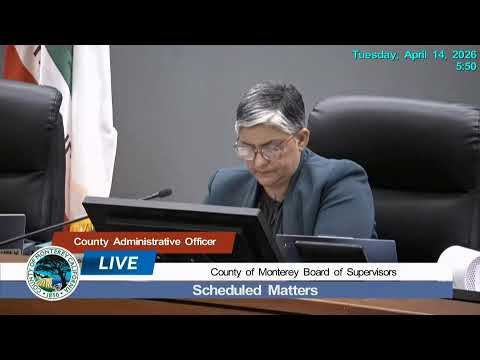
Sheriff Tina Nieto returned to the Board of Supervisors April 14 to answer detailed questions about transfers to U.S. Immigration and Customs Enforcement (ICE) reported in the county27s annual TRUTH Act briefing. Nieto said the sheriff27s office followed California law (SB 54/California Values Act) and provided case summaries for 21 individuals transferred to ICE in 2025: 13 based on convictions and eight who had been "held to answer" following court proceedings, she said. The Sheriff described the standard the office uses to evaluate ICE requests as a case-by-case review grounded in statutory criteria and public-safety considerations.
Nieto told the board her office received 295 ICE requests in 2025 and approved only 21 transfers (a denial rate of roughly 90%). She provided a case-by-case summary of qualifying charges and reiterated that ICE interviews and transfers are separate processes; written inmate consent is used before ICE interviews, she added.
Public comment was large and sharply divided. Immigrant-rights organizations, service providers and many residents urged the board to prohibit county cooperation with ICE, end participation in the State Criminal Alien Assistance Program (SCAP), strengthen TRUTH Act reporting and create civilian oversight. Others — including some supervisors and business representatives — urged caution, noted the statutory framework that permits limited cooperation in certain cases and asked staff to quantify impacts before changing county practice.
The board did not adopt an ordinance or immediate policy change at the meeting. Instead, supervisors directed staff to return with a more detailed package (requested content includes expanded TRUTH Act-style reporting, legal analysis, a review of outside employment authorizations, SCAP participation and fiscal implications) and to study the San Mateo County ordinance model as a possible template. Staff was asked to return with the requested materials in June so supervisors could consider next steps — including whether to draft local ordinances that would limit ICE access to county property, restrict use of county resources, or codify stricter local procedures for judicial warrants and transparency.
Sheriff Nieto requested that County Counsel appoint independent legal counsel for the sheriff if the board pursues directives that would affect operational authority; she indicated she might pursue statutory remedies if a conflict is not recognized. The board instructed staff to gather additional legal and fiscal analysis and return with recommended options for the board to consider at a future meeting.
The matter drew extended public interest and an unusually large public comment turnout; several community groups said they will continue advocating for immediate policy changes.
The board27s request for a staff follow-up report will outline feasible next steps, legal constraints, potential ordinance language, fiscal impacts and resource needs for any proposed policy changes.