Get Full Government Meeting Transcripts, Videos, & Alerts Forever!
Get email alerts on the Cannabis Regulation topic
No spam. Unsubscribe anytime.
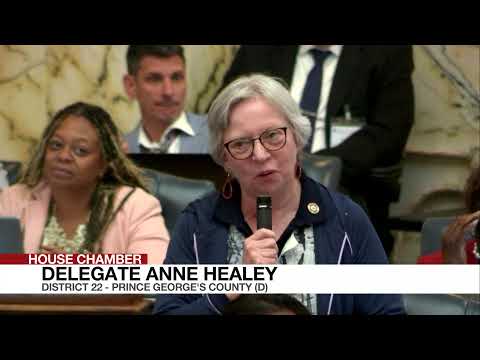
House debates 'attractive to minors' standard in cannabis advertising amendments
Summary
A prolonged floor colloquy focused on amendments to cannabis advertising law, debating whether to remove 'directly or indirectly targets' language and how to define 'attractive to minors' (examples cited: cartoon characters, mascots); enforcement by the Maryland Cannabis Administration and appeals were discussed.
Legislators spent a lengthy block of floor time on changes to cannabis advertising rules, centering on how to define material that is "attractive to minors." Lawmakers balanced clarity for businesses with enforceability by regulators.
Floor exchanges explained that certain language was removed in one part of the bill ("directly or indirectly targets") while related language — adding that advertising that "targets or is attractive to minors" — appears elsewhere. Members asked how broadly enforcement would be interpreted and whether the Maryland Cannabis Administration or the Alcohol, Tobacco, and Cannabis Commission would have discretion to determine when advertising is impermissible. The floor leader and others said the intent was to prohibit clearly targeted elements — for example, "a cartoon character or mascot or any other depiction that is commonly used to market products to minors" — while avoiding overbroad enforcement against incidental decorations like holiday lights.
Lawmakers also discussed a provision requiring that audience composition data show at least 85% of an audience is above the legal age for certain advertising placements; members asked whether regulators must accept third‑party audience data or could challenge it. The transcript records repeated requests for clarity about enforcement processes, appeals and how the administration will interpret vague terms.
No additional statutory appropriation was tied to the amendments on the floor; the debate primarily concerned statutory language and administrative discretion. The measure was advanced to third reading with the Senate amendments and related changes, and floor leaders said administrative procedures and guidance would be relied upon to implement the standard.