Get Full Government Meeting Transcripts, Videos, & Alerts Forever!
Get email alerts on the Darus Theater topic
No spam. Unsubscribe anytime.
Consultant urges Boonton to recruit operator before spending on Darus Theater renovation
Summary
A management consultant told the Boonton Council a market exists for live commercial entertainment and arts-education at the Darus Theater but recommended the town secure an operating partner before committing capital to renovation. He offered a two-month timeline to supply prospective partners.
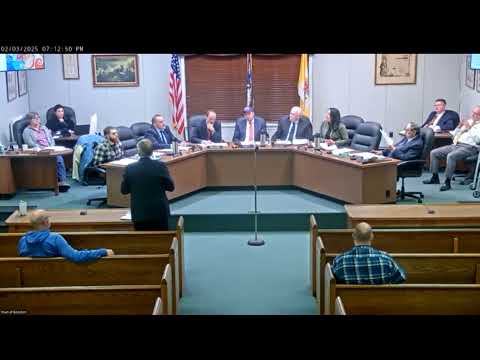
John Duncan, a management consultant with Web Management Services, told the Boonton mayor and council that a mid-study review of the Darus Theater shows regional demand for two core program streams — commercially oriented live entertainment (music and comedy) and arts-education programming — plus secondary uses for meetings/events and some film presentation.
"There is a potential audience or events at the Darus Theater given the nature of the DriveTime population," Duncan said, summarizing market-data his team bought for Boonton and the surrounding 30-minute market area. He said that education levels in the market are a strong predictor of arts participation and that the study found gaps in local venues for both live presenting and arts-education programs.
Duncan told the council the study included an inventory of venues and a quality-capacity matrix and that, although there are competitive venues in the region (he cited South Orange, Victoria Theater at NJPAC and Proctor precedents), Boonton may be positioned to attract audiences for the smaller-seat market and for education programs.
Most of the council’s questions focused on practical issues: what constitutes a 'quality' venue, parking, and the revenue model for education. Duncan described the eight criteria used to score venues — including functionality, acoustics, audience amenities and backstage support — and said the theater could score between 3.5 and 4.0 on his matrix with targeted renovation. On parking he said the perception of nearby parking is often as important as exact counts and that many operators insist on visible spaces close to the venue.
Duncan’s central recommendation was procedural and financial: "we don't think that you should spend any money to renovate that building until you have identified an operator" who can assume operating risk. He described three operator models the town should pursue: a commercial operator, a nonprofit arts-education operator, or a regional performing-arts center acting as a satellite. He said his team will return in a couple of months with a long list of potential partners and steps for a competitive recruitment process.
Council members repeatedly pressed whether partial renovations or municipal operation were viable; Duncan said partial fixes might not attract an operator and discouraged the town from acting as the ongoing operator. He also noted that arts-education programming can generate both earned revenue (tuition, rentals) and contributed income (grants and donations), making it attractive from both mission and fundraising perspectives.
Next steps: Duncan’s team will continue the study and provide a list of prospective operators and a recommended process for recruitment. The council did not vote on any capital commitment during the meeting.