Get Full Government Meeting Transcripts, Videos, & Alerts Forever!
Get email alerts on the Education Funding topic
No spam. Unsubscribe anytime.
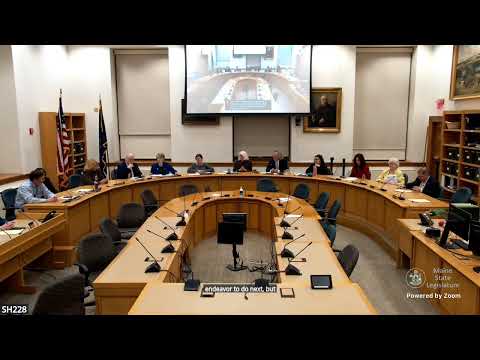
Appropriations panel advances school funding formula change amid warnings of $44 million out-year cost
Summary
The Appropriations Committee advanced LD2226 to adjust Maine's Essential Programs and Services school funding formula after members debated its fiscal impact; proponents said regional adjustments benefit most labor markets while opponents said the out-year cost would worsen the state’s structural gap.
The Appropriations Committee voted to advance LD2226, a measure to amend the Essential Programs and Services (EPS) school funding formula, after extended debate about the bill’s long‑term cost and potential effects on property taxpayers.
Supporters said the regional adjustment in the proposal would direct new aid to labor markets statewide. "It's roughly 39 million... because we have several hold harmless parts of the bill it's going to run about 44 million," Representative Michael Brennan said, summarizing the committee's fiscal estimates for the measure's initial implementation period.
Opponents said they had understood the change to be cost‑neutral when they voted on it earlier and that learning of the out‑year fiscal implications changed their votes. Representative Pette said she had voted in favor on the floor but would not support the measure now: "I will not be voting for this...because I at the time did not understand the cost of this in the out years," she said, explaining her reversal.
Members questioned how the formula change would interact with a separate policy to set a $50,000 starting teacher salary. Proponents said a significant portion of the regional adjustment would flow to teacher compensation and general operating expenses; critics expressed concern that districts often spend new revenue and then raise property tax commitments in subsequent years.
Committee members also framed the discussion in the context of the state's broader fiscal outlook. Lawmakers remarked that the state's structural gap — the difference between projected spending and revenues — would complicate future budget choices and could lead to tax increases in future sessions.
The committee's motion to take LD2226 off the special appropriations table carried; the committee recorded the motion as approved and the bill will proceed to the next stage of consideration.
What happens next: LD2226 advances for further floor or cross‑chamber consideration; committee members said additional fiscal detail and implementation timing will be important in subsequent deliberations.