Get Full Government Meeting Transcripts, Videos, & Alerts Forever!
Get email alerts on the Development Agreement topic
No spam. Unsubscribe anytime.
Council orders staff to seek options after developer disputes $169,153 bill for County Road 29 work
Summary
New Prague City officials discussed a long-unfinished 2005 development agreement for Tulski Acres after developer Randy Kubish contested a $169,153.84 charge for County Road 29 (CASA 29) improvements; council directed staff and the city attorney to develop enforcement and settlement options.
New Prague City Council on [date not specified] directed staff to return with options after a developer disputed a bill tied to a two-decade-old development agreement for Tulski Acres.
Josh, a city staff member, told the council that the 2005 agreement still contains unperformed obligations: the city has not accepted the roadways or utilities, the developer has not dedicated 4.25 acres of parkland (or paid a fee-in-lieu of $212,500), and an easement for a future water tower remains unsigned. He told council the county completed CASA/County Road 29 work and the city and developer previously agreed on cost shares; the developer was invoiced $169,153.84 for his portion.
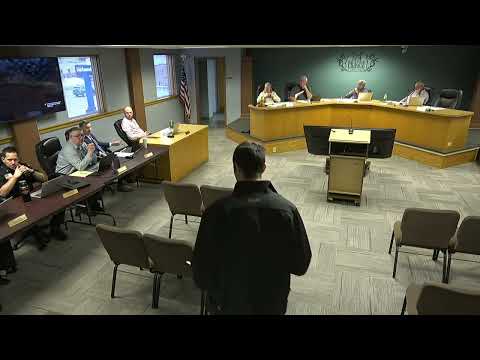
Randy Kubish, the developer, told the council that the road was not lowered to the extent he expected when the subdivision was planned and that grading changes reduced the marketability of several lots. "The whole project was tainted by the the fact that the road didn't get lowered," Kubish said, describing site visits with city and county staff and saying he was not aware of some grading decisions until a homeowner contacted him during construction.
City attorney Scott Riggs said the agreement appears to remain in force and is an "unperformed contract," which preserves the city's remedies. "The contract's out there and there are still obligations that have not been performed at this point in time," Riggs said, noting the city could pursue options that include placing liens under the agreement's Section 5.6, seeking other statutory remedies, or negotiating a settlement.
Staff and the council recounted that a developer letter of credit had been lost during the 2008–09 financial crisis when its issuing bank failed, removing a key source of financial security at the time and complicating later collection attempts. Josh said the city typically now requires performance and payment bonds instead of letters of credit.
Council members pressed staff for clarity on the scope of the county's work, whether the county's actions matched the agreement's intent to "lower" County Road 29, and what liability the city might face for negotiating less than the contract amount. Legal staff said changing or abandoning the agreement would require a council action and could shift costs for parkland, water‑tower infrastructure and maintenance onto other taxpayers.
Rather than pursue an immediate vote on acceptance of improvements or collection, the council directed staff to work with city attorney Scott Riggs and return with a menu of options for enforcement or settlement. Council member Maggie volunteered to participate in negotiation discussions with the developer. No formal collection action was taken at the meeting.
Next steps: staff will bring options to a future council meeting for direction on whether to pursue liens, negotiate a settlement, pursue mediation or take other legal action.