Get Full Government Meeting Transcripts, Videos, & Alerts Forever!
Get email alerts on the Inspection Centers Investigation topic
No spam. Unsubscribe anytime.
Former DTOP secretary testifies to House committee about missing files, inconsistent fines and procurement of new inspection machines
Summary
Former DTOP secretary Eilen Vélez told a House Transportation and Infrastructure committee that Disco (Dirección de Servicio al Conductor) carried out investigations into inspection centers under Law 22 and regulation 9526, but committee members raised gaps: missing case files, inconsistent administrative fines, alleged informal fee negotiations and questions about a November 2024 adjudication for new inspection equipment.
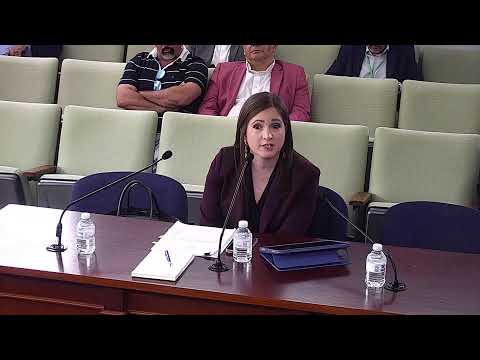
SAN JUAN — The House Commission on Transportation and Infrastructure spent nearly three hours on March 9 examining how Puerto Rico’s vehicle inspection program was run and modernized, pressing former Department of Transportation and Public Works (DTOP) Secretary Eilen Vélez over missing investigative files, uneven fines and the procurement that led to a new inspection-machine vendor.
Vélez, who served as DTOP secretary from Jan. 2, 2021, through Dec. 31, 2024, was sworn and delivered a sequential account of how Disco (la Dirección de Servicio al Conductor) handled complaints and investigations into inspection centers. She told the committee the office followed an established protocol under Law 22 of 2000 and regulation 9526 and that Disco worked with legal advisers and outside agencies when investigations warranted further action.
"Si llega ... recomendaciones de los asesores legales, así es que se procede," Vélez said, describing the role of Disco’s legal staff in recommending administrative fines or referrals. She added that Disco coordinated with other agencies, including Hacienda and offices tied to permits and budgeting.
Why it matters: Committee members said apparent gaps and inconsistent practices could expose motorists and the public to safety risk and undermine trust in inspection stations. Members repeatedly pressed for documentary evidence — case files, referral logs and minutes of procurement meetings — to verify whether administrative enforcement was applied uniformly and whether possible criminal conduct was referred appropriately to the Department of Justice.
Missing documentation and inconsistent fines
Lawmakers cited multiple instances in which centers told the commission they had been closed or fined and later could not obtain full investigative records. Members described cases where centers were fined large amounts (examples cited by witnesses ranged from several hundred dollars up to tens of thousands) and then paid substantially smaller settlements; one witness under oath said a $25,000 fine was effectively resolved after paying $5,000.
Vélez acknowledged she did not personally receive or retain every case file. "Yo no entro a mirar de quién o quién está en cada centro de inspección, pero sí ellos me venían y me daban toda la información," she told the committee, and recommended the panel request Disco’s internal "bitácora" (log) of referrals and enforcement actions from 2021–2024.
Procurement and equipment costs
The hearing also reviewed the modernization process for inspection systems. Vélez said the technical specifications and pliegos (RFP documents) were developed with technology advisers (referred to in testimony as PRITS/PRIT/PRS), that bids were received in September, and that an adjudication was made in November 2024. A memorandum of understanding and subsequent contract actions were completed under the later administration in 2025.
Committee members read testimony and public comments alleging that some centers were told they would need an initial deposit (reported in testimony as $6,000) and monthly payments (figures cited in hearings ranged and were sometimes reported as roughly $500 to $1,200). Vélez said the negotiation and contract details were handled after her tenure and that she did not have the exact payment terms.
Discretion, delegation and legal authority
Several members asked where the legal delegation appears that authorizes Disco to act in the secretary’s stead when suspending or closing centers. Vélez replied that Disco is the DTOP agency authorized to execute and enforce Law 22 and its regulation, and that internal organizational documents reflect agency roles; she recommended committee staff request those internal delegations and the record of referrals and administrative decisions.
Referrals to justice and interagency work
Lawmakers pushed on whether administrative findings that might amount to crimes were referred to the Department of Justice. Vélez said Disco’s legal team produced recommendations and that not all administrative fines result in criminal referrals; nonetheless, the committee said it found no record in the documents provided so far showing formal referrals in many cited cases and asked the secretary to produce the referral log.
Next steps
Committee members said they will request the Disco referral and enforcement log for 2021–2024, summon the current DTOP secretary, the Treasury (Hacienda) secretary and Disco director Mari Fuster for follow-up, and seek minutes and procurement records (RFP pliegos, evaluation committee membership and award documentation) related to the November 2024 adjudication. Lawmakers signaled intent to propose statutory or regulatory changes to clarify delegation, tighten recordkeeping and standardize enforcement procedures.
What Vélez said she could and could not confirm
Vélez repeatedly told the committee she followed legal protocols and that many procedural details are handled by Disco staff and legal advisers. She declined to offer definitive answers when documentary evidence was not available to her during testimony and urged the commission to request internal files rather than rely solely on memory.
The committee adjourned after scheduling follow-up appearances, including the current DTOP secretary, Hacienda and Disco leadership. Members said they expect additional document requests and possible legislative recommendations aimed at strengthening oversight and transparency.
Sources: Public testimony and Q&A before the House Commission on Transportation and Infrastructure. The committee read a letter from attorney Lincy López Murillo informing the panel that witness Arturo Delis was interviewed by the Division of Public Integrity and would not appear for the scheduled testimony.