Get Full Government Meeting Transcripts, Videos, & Alerts Forever!
Get email alerts on the Charter Revision topic
No spam. Unsubscribe anytime.
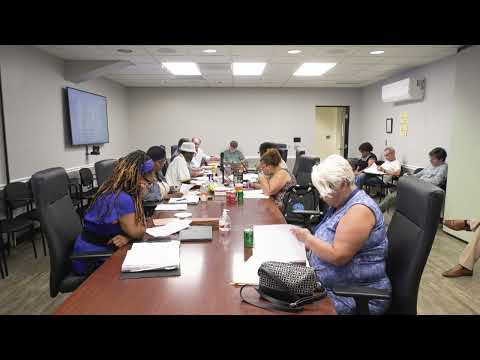
Ordinance committee approves edits to Bridgeport charter draft after debate over ethics office funding and council structure
Summary
The Bridgeport Ordinance Committee on July 30 approved recommended amendments to Draft 4 of the city's charter revision, transmitting the package (as amended) to the Charter Revision Commission and the full city council after extended debate over whether to tie the new municipal Office of Ethics to "pursuant to available funding," the ethics commission's appointment authority, term limits, and a proposed council reconfiguration.
The Bridgeport Ordinance Committee voted on July 30 to approve a package of amendments to Draft 4 of the city's proposed charter and to transmit the committee's recommendations to the Charter Revision Commission and the full City Council for action.
The committee spent substantial time on several contested but consequential items: whether the charter should include a conditional funding phrase tied to the new municipal Office of Ethics; who should have the statutory authority to appoint that office's director; whether the charter should adopt term limits for the mayor; and proposals to change the composition of the City Council.
On the staffing and funding language for the Office of Municipal Ethics, committee members disagreed over a phrase that would tie the office's staffing to "pursuant to available funding." Some members said that including the conditional wording creates uncertainty and could be read as weakening the new office's standing; others noted that municipal funding is determined annually and that any charter language should not create the impression of a mandated appropriation. The committee ultimately removed the conditional phrase from the draft language pending further review and with the understanding that budgetary decisions remain subject to the annual appropriation process.
Members also debated whether the ethics commission or some other body should be the appointing authority for the municipal ethics director, and whether the charter should use the mandatory word "shall" or the permissive "may" when describing that authority. Legal counsel warned the committee that the use of "shall" could be construed as creating a mandatory obligation that might trigger legal remedies if the city failed to fund the office, and the committee adjusted the wording to make the appointing authority explicit while preserving budgetary discretion.
Separately, the meeting included a lengthy discussion about proposals to add or reconfigure council seats. One proposal would combine single-member district representation with five at-large seats and place limits on how many at-large members could come from a single party to create guaranteed minority representation. Members raised logistical concerns about timing (the proposal would likely require redistricting after the next census), political feasibility and the risk that adding late, substantive items could jeopardize overall voter approval of a charter package. No final change to council composition was adopted at the committee meeting.
The committee also addressed Board of Education and staffing language: the draft would designate certain superintendent-level cabinet positions as "unclassified," allowing the superintendent greater flexibility to appoint and remove senior officers. Committee members and labor counsel flagged the risk that employees in those positions could later seek inclusion in bargaining units, which would change removal protections. The committee asked staff to prepare clearer grandfathering language and to confirm the intent and likely impacts on existing employees.
Additional topics included technical edits (capitalization, gender-neutral language and typographical fixes), adjustments to the budget calendar, and review of several chapters that the committee recommended be considered for sunset or conversion into ordinances (notably several boards and commissions, and provisions tied to the public library that interact with historical trust language and state law).
After the deliberations the committee voted to approve the committee's recommendations to Draft 4 as amended and to forward the resolution and edited draft to the Charter Revision Commission and the full Council. The resolution authorizes editorial substitutions (punctuation, capitalization, typos and similar edits) and permits consideration of sunset provisions at the council stage. The committee's approval was done by voice vote; individual roll-call tallies were not recorded in the committee transcript.
The council is expected to take up the revised draft at its next meeting, where members may further amend the text by substitution before referral to the referendum process or other next steps defined by the Charter Revision Commission.