Get Full Government Meeting Transcripts, Videos, & Alerts Forever!
Get email alerts on the Zoning Ordinance Updates topic
No spam. Unsubscribe anytime.
Planning and Zoning workshop debates mobile‑home definitions, barber/beauty shop approvals and vision‑clearance rules
Summary
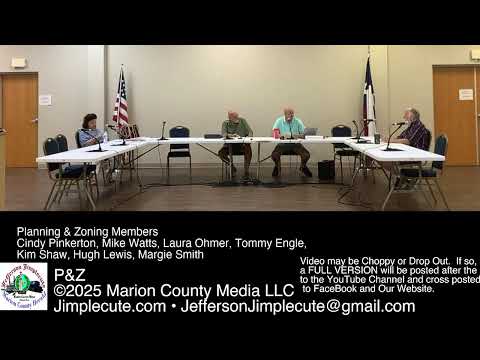
At a Marion County Planning and Zoning workshop, commissioners reviewed proposed zoning ordinance edits including definitions for mobile, manufactured and modular homes, whether barber/beauty shops in residential areas should require council approval, and simplifying the vision‑clearance triangle to a 10‑foot corner rule; staff will refine language, add graphics, and return with a consultant contract for PNZ review before sending items to council.
At a Marion County Planning and Zoning (PNZ) workshop (date not specified), commissioners and staff reviewed proposed zoning ordinance edits and flagged several items for clearer language and follow‑up. Key topics included updated definitions for mobile, manufactured and modular homes; whether barber and beauty shops should require council approval in residential areas; renovation thresholds that would trigger full building‑code compliance; and confusing vision‑clearance wording that staff was asked to simplify and illustrate.
The session’s presenters said the packet now includes relocated use tables and that staff will add explicit definitions for "manufactured" and "modular" housing so the ordinance distinguishes those from older "mobile homes" (units built before 1977). A staff participant noted HUD‑manufactured homes are built to different standards than older mobile homes and that modular units—typically fixed to foundations and without transport axles—are usually eligible in more zones. Commissioners discussed marking older mobile homes as prohibited for new placement while preserving grandfathering for units already on site.
Why it matters: the definitional distinctions affect which housing types can be moved into the county, how renovations are permitted, and how property appraisals and insurance treat different units. During the meeting a participant raised the common code practice that when renovation passes a given percentage of value it must be brought fully to current code; members asked staff to confirm the threshold language (participants discussed an illustrative 50% figure but did not set a final number).
Commissioners also questioned whether small commercial uses—specifically barber and beauty shops operating in residential zones—should remain allowed only with city council approval. Staff and members discussed treating those uses as conditional or home businesses with clear square‑foot and garage‑work limitations; the group asked staff to draft consistent terminology and show how those uses would be coded across the zoning table.
On procedural and statutory items, staff reported Melissa had circulated a TML list of state law changes from the recent session and suggested PNZ incorporate statute‑required definition updates (for example, state definitions for home‑based business categories). Members noted some statute changes apply only to larger cities but agreed it would help local clarity to include consistent definitions where applicable. Staff also said a consultant contract to help establish fee structures, permits and inspections is scheduled for council consideration the following day; multiple PNZ members requested to review the contract and scope before council approval because PNZ will be the primary working partner for implementation.
A major portion of the workshop focused on the ordinance’s "vision‑clearance" language, which currently describes a triangular area measured from an intersection. Commissioners and staff described the existing wording as confusing and hard to calculate in practice; the police department is listed in the packet as the enforcement authority for clearance issues. Multiple participants suggested simplifying the requirement to an easy‑to‑measure rule (one proposed formulation: "no structure, hedge or tree growth maintained within 10 feet of the corner of the intersection") and asked staff to produce a diagram and consult police on enforceability and appropriate distances.
What’s next: PNZ asked staff to (1) add and standardize definitions for manufactured and modular homes and other statute updates; (2) clarify the renovation threshold that triggers full code compliance or disqualifies a unit from remaining; (3) draft a proposed approach to barber/beauty shop and home‑business approvals and show how those uses will appear in the use tables; (4) circulate the consultant contract and scope for PNZ review before the council meeting; and (5) provide a graphic and recommended text for vision‑clearance setbacks for review at the next PNZ meeting. No formal vote or ordinance adoption occurred during the workshop.
Speakers quoted in the meeting were drawn from PNZ and staff; direct quotes in the packet were attributed to participants during discussion and staff review. The PNZ meeting paused near 6 p.m. with members agreeing to continue detailed reviews and return finalized text to the council package when clarifications are complete.