Get Full Government Meeting Transcripts, Videos, & Alerts Forever!
Get email alerts on the Freedom Of Navigation topic
No spam. Unsubscribe anytime.
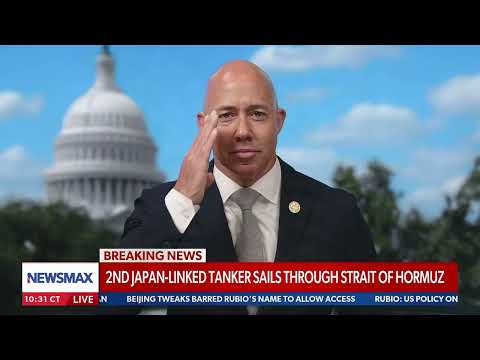
Rep. Brian Mast: U.S. military protecting freedom of navigation amid Iranian harassment
Summary
Rep. Brian Mast said U.S. forces are working daily to ensure freedom of navigation in the Strait of Hormuz and accused Iran of maritime harassment intended to intimidate insurers and ship captains. He described Iran’s forces as degraded and said the U.S. maintains a distinct advantage.
Rep. Brian Mast, chair of the House Committee on Foreign Affairs, said the U.S. military is working "to ensure freedom of navigation on a daily basis," and described Iranian actions in the Gulf as harassment intended to coerce vessels and insurers away from the Straits of Hormuz.
Mast told questioners that Iran is attempting to "harass, coerce, do anything to intimidate the Straits Of Hormuz" and that Tehran’s aim is to force ship captains and insurers to contact Iran before transiting those waters. He said U.S. forces are preventing that outcome and also preventing Iranian vessels from moving into certain ports.
Mast framed the situation as "a very dynamic situation, all balanced within a very fragile ceasefire," adding that the president has said the ceasefire is "on life support." He also asserted that Iran has "pretty much a destroyed navy and destroyed air force and stockpiles of weapons all destroyed," and said the U.S. is at "a very distinct advantage." The transcript records these statements as Mast’s characterization of Iranian capabilities and U.S. posture; no independent evidence was offered during the exchange.
The exchange focused on operational and diplomatic responses rather than new policy measures or formal votes. Mast’s remarks emphasize continued U.S. naval operations to keep shipping lanes open and characterize Iran’s activities as harassment; the transcript does not record additional detail on specific deployments, rules of engagement or changes to naval patrols.
The interview ended after Mast expanded the discussion to China’s role in the region and the U.S.-China bilateral relationship, which he said is consequential to U.S. strategy in the Gulf.