Get Full Government Meeting Transcripts, Videos, & Alerts Forever!
Get email alerts on the Infrastructure topic
No spam. Unsubscribe anytime.
County and city officials point to impact fees, public‑private water deals and zoning as tools to build housing and manage growth; leaders flag data‑center and
Summary
Commissioner Josh Slottnik described zoning in the Swan, impact fees to fund water capacity in Lolo, and a buy‑back of a $6 million water system in a targeted economic district; later Q&A raised concerns about data centers, energy and AI ethics.
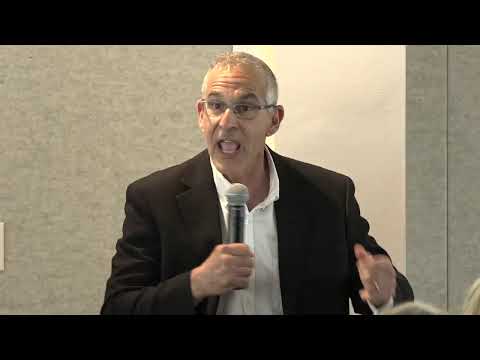
At City Club’s April forum, Missoula County Commissioner Josh Slottnik walked attendees through three local examples of how the county and city use planning tools and public–private partnerships to create long‑term stability amid external volatility.
Slottnik described a Swan neighborhood planning effort that moved the community from opposing an outside resort proposal to producing a neighborhood plan that will enable zoning aligned with residents’ vision. He said that effort required lengthy deliberation and technical support.
On Lolo, Slottnik said the county established an impact fee process under statute — a board with community and development representation plus an economics and engineering study — to charge one‑time fees at permitting to fund new water infrastructure so growth pays for the one‑time capital costs rather than burdening existing users.
He also described a public‑private water deal in a targeted economic development district at the 'Y': two industrial builders (named in the forum) bore more than $6 million in upfront construction costs for a public water system; the county/city will buy the system back and repay the builders using TIF, paying roughly $5.3 million while the builders retain about $800,000 in private benefit, Slottnik said.
Slottnik recounted volatility over federal and state policy — including a referenced loss of a $20+ million federal grant for the Highway 200 corridor — and framed these local tools as ways to be resilient when higher‑level funding shifts.
During audience Q&A city and county leaders also discussed artificial intelligence, potential data centers and utility issues. Mayor Andrea Davis said the city has an AI ethics policy and is assessing efficiency gains but is behind many private peers in AI adoption. Officials said large data‑center proposals face zoning and commission review; Missoula’s standards require new renewable electricity to be created for large loads rather than relying on existing hydro or offsets, raising a high compliance bar for prospective projects.
What this means: county and city leaders portrayed deliberate planning, local financing tools and partnerships with private developers as the practical ways Missoula is trying to expand housing and industrial capacity while protecting local values and climate goals.