Get Full Government Meeting Transcripts, Videos, & Alerts Forever!
Get email alerts on the Childcare topic
No spam. Unsubscribe anytime.
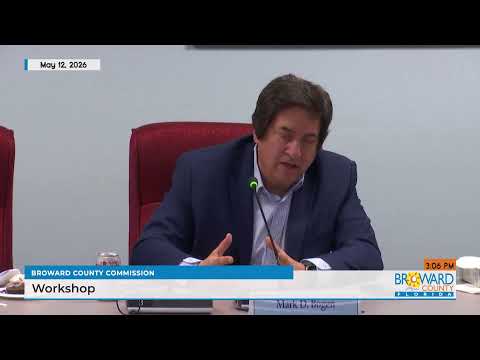
Broward County commissioners split over adding childcare to new government center
Summary
County staff told commissioners that a 120‑child facility would need about 14,000 sq ft and roughly $15.4 million in capital plus ~$1.4 million in annual operating costs; commissioners debated third‑party operation, a voucher alternative and whether the county should enter childcare provision, but did not reach a majority to include the space in the building program.
County staff presented options for including an on‑site childcare facility in the proposed Broward County government center and commissioners divided over costs, demand and the county’s role in providing care.
Isami Ayala Goyasu, a county staff presenter, told the board the analysis in an April memo used a working assumption of 120 enrolled children to illustrate space and cost tradeoffs. “If you take into consideration 120 children as the base on enrollment, that will require an additional 14,000 square feet,” she said, and projected about $15,000,000 in added capital cost; when added to the previously presented $663,000,000 reduced program, staff said the program total would rise toward $678,000,000. For an in‑house operation staff estimated roughly $1,400,000 in annual operating costs.
The staff presentation described two operating models: a third‑party operator (with scenarios for full rent or a 50% discount) and an in‑house service run out of human services that would require additional pay grades and staffing. Staff also modeled a non‑facility alternative: a small monthly voucher (the example used was about $150 per month per participant) to subsidize private childcare for employees. The memo and presentation emphasized that many inputs were assumptions and that staff had not surveyed county employees directly about likely demand.
Several commissioners pushed back on the capital and operating estimates and whether the county should compete with private providers. “There is no way on God’s green earth that we should spend $15,400,000 and millions of dollars a year for a childcare center that we don’t have now that we can’t afford,” said Commissioner Michael Yudin, voicing concern about the upfront cost and the likelihood of winning board approval for such a capital outlay.
Others framed the idea as a workforce and public‑services investment. Senator Rich argued that onsite childcare can improve retention and support working parents, noting long waiting lists and high private costs for infant care. “There’s tremendous advantages…for this county government not to include a childcare center is just not the right way to go,” Senator Rich said.
Several commissioners who opposed building a county‑run facility said a voucher or subsidized third‑party model would meet policy goals at lower capital cost and avoid government competing with private daycare providers. Commissioners also raised liability and insurance concerns for a county‑operated program and asked for data on employee interest and utilization of nearby providers; staff responded that an employee survey had not been conducted and that some workforce distribution and parental‑leave use data were used instead to estimate potential demand.
After discussion, the mayor asked each commissioner for a simple yes or no on including childcare space in the county‑owned building. Multiple commissioners expressed reservations or declined; the county administrator summarized the result as no majority consensus to include childcare in the building program at this time. Staff said the design schedule remains on track regardless of this decision and that the board could revisit the option with additional direction.
What’s next: staff recommended more precise demand and workforce surveys, a clearer budgeted program with alternatives (voucher, third‑party operator, or limited county space), and further analysis of liability and operating models. The board did not adopt a capital appropriation or an operating plan during the workshop.