Get Full Government Meeting Transcripts, Videos, & Alerts Forever!
Get email alerts on the Strategic Planning topic
No spam. Unsubscribe anytime.
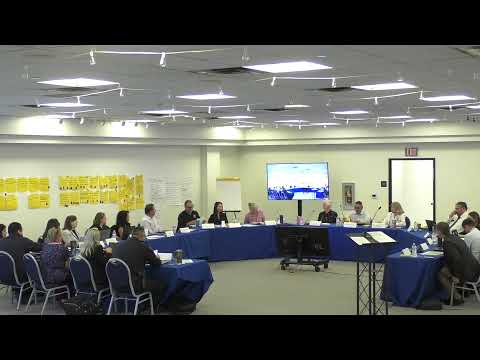
Hemet council workshop prioritizes communications, arts and infrastructure amid $10 million budget challenge
Summary
At a special April 22 workshop, Hemet council and staff reviewed prior initiatives, heard operational and public‑safety updates, and used a dot‑voting exercise to prioritize work‑plan items — placing communications, arts/placemaking and infrastructure among top choices while staff balances a cited $10 million budget gap.
Hemet’s City Council spent April 22 in a strategic‑planning workshop that combined an overview of past accomplishments with a participatory prioritization exercise for the FY26‑27 work plan.
City Manager Noah opened the session, framed it as a prioritization exercise and told council members the city is facing “a $10 million challenge that we need to solve between now and the end of June,” asking members to focus on ideas that are specific, measurable and feasible within budget constraints.
What council and staff reported: A series of departmental updates highlighted a range of accomplishments and ongoing projects. Officials cited expanded street‑sweeping negotiations with CRNR (a shift from monthly to weekly service that will require signage and enforcement changes), a rise in departmental staffing, and operational pilots such as a drone first‑responder program and seven‑day AROT team coverage. Public‑safety figures presented during the session included reported year‑over‑year reductions—homicide down about 40%, rape down about 30%, robbery down about 26%—and improved average response times (about a 10% decrease overall and roughly 7.5% for priority‑one calls).
Branding, engagement and events: Staff and council described the new Hemet branding and a live RFP to license merchandising; Hemet365, an upcoming community event calendar, was announced as coming live in weeks. Economic development said the city attracted roughly $15 million in investment through two tax‑sharing auto agreements and secured two CDBG grants.
Dot voting and top priorities: Council used a three‑tier dot system ("air" = must‑have, "water" = important, "chocolate" = nice‑to‑have) to rank ideas. Items that received the most support included improved communications and public‑facing progress reporting (rolling monitors and a 30‑second social update feed), arts and public‑space activation (monthly downtown arts events, murals, painted utility boxes), better trash enclosures and targeted street and traffic improvements. Staff will synthesize the dot results, produce a draft work plan and return it for council consideration as early as the next regular meeting or within two weeks.
Notable proposals and next steps: Council members proposed several specific items during brainstorming, including left‑turn pockets at certain intersections, a community resource center for emergency response, a three‑times‑per‑year weed abatement schedule, and improved grant‑coordination processes. One council member raised the idea of pursuing charter‑city status to address prevailing‑wage obligations; the city attorney advised that such a change would require substantial public outreach, a charter drafting process and voter approval.
Why it matters: The workshop recast many ongoing efforts as priorities tied to budget constraints and implementation capacity. Staff advised that items with dots will be compiled into a draft work plan and presented with budget implications; quarterly progress reports will follow adoption.
What’s next: Staff will prepare and circulate a draft work plan reflecting dot‑voting results and council direction, then present it at the next regular meeting (April 28) or within a two‑week window for formal consideration and assignment of ad‑hoc roles or implementation responsibilities.