Get Full Government Meeting Transcripts, Videos, & Alerts Forever!
Get email alerts on the Ambulance District topic
No spam. Unsubscribe anytime.
Residents press board on ambulance tax district; county and Goshen EMS explain service and billing
Summary
At the April 23 meeting residents pressed the board for transparency about the newly formed ambulance tax district and how $450,000 in tax revenue will be used; Orange County EMS and Goshen EMS leaders described certification, billing limits, 24/7 coverage, and plans to add paramedics.
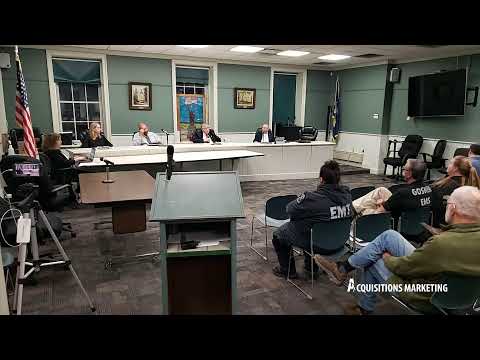
During privilege of the floor on April 23, resident and town participant Neil Halloran pressed the board for documentation and transparency about the ambulance tax district formed in early 2025 and the town’s expectations for contracted EMS services.
Halloran said he received tax bills this year reflecting the ambulance district and said he had not seen public materials explaining service levels, procurement steps or contract terms. He asked whether the town sought competitive bids or issued an RFP, what level of service (basic life support or paramedic/ALS) the district will guarantee, and how the district’s $450,000 relates to the services residents can expect. "I don't know how you get $450,000 of taxpayer money and give it away on a handshake," Halloran said, asking for copies of the contract and request‑for‑proposal materials if they exist.
Richard Wylie, deputy commissioner of emergency services and Orange County EMS coordinator, responded that ambulance coverage is regulated and requires a certificate of necessity; Goshen currently has a certificate and primary coverage is provided by Goshen EMS and two commercial agencies (Empress and Ambulenz). Wylie said Goshen EMS has operated two ambulances 24/7 for five years and cited performance statistics he pulled earlier: Goshen responds to about 98% of calls in under 10 minutes. He also explained that reimbursement from payers has not kept pace with rising operating costs, which is why some municipalities form tax districts to support service. "Goshen's doing a great job," Wylie said, adding that RFPs are not mandatory for professional EMS services where the existing provider meets standards and that he can help draft contract language if the board wants a formal agreement.
Goshen EMS leaders addressed Halloran's transparency concerns. Kristen Eagleson, chief of Goshen EMS, said board liaison reports were intended to keep the town informed and offered to appear at future meetings to report monthly. Ernie Stonick, president of Goshen EMS, said the organization is moving to paramedic (ALS) staffing within weeks, emphasized cost control and invited board members and residents to tour the facility.
Board members and EMS leaders agreed to follow up with documentation. County and agency representatives said billing restrictions limit what charges can be assessed for Medicare/Medicaid and that the tax district helps stabilize local EMS operations in the face of rising costs.