Get Full Government Meeting Transcripts, Videos, & Alerts Forever!
Get email alerts on the Comprehensive Planning topic
No spam. Unsubscribe anytime.
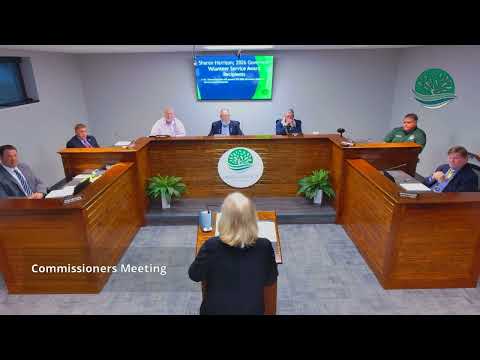
Consultant outlines Greene County comprehensive land use plan update required under Chapter 160D
Summary
An unnamed planning consultant told Greene County commissioners the update will align zoning and text amendments with North Carolina's Chapter 160D, and described a process of data collection, community engagement, a steering committee and an implementation action plan; next steps include finalizing the steering committee and launching a project website.
An unnamed consultant told Greene County commissioners that state law requires the county to keep its comprehensive land use plan current and described a multi-step process to update the county's plan.
"This is required to have an enforced zoning in North Carolina. The general statutes require you all to be compliant with Chapter 160D," the presenter said, framing the update as both a legal requirement and an opportunity to set a long-term framework for growth.
The consultant outlined typical plan elements the county will develop: a project kickoff and staff alignment, a baseline review and data collection (including updated FEMA flood maps and soil and GIS data), a public engagement program with in-person meetings and an online survey, stakeholder interviews grouped by sector, and a steering committee that will guide the drafting process. The presenter said the plan will include an implementation or action plan that assigns departments, estimates investment levels and suggests anticipated timing for each item.
"One of the biggest reasons to have this plan though is to provide a framework for your future growth. So, what does Greene County want to be in the future?" the presenter asked, urging commissioners to consider the plan as a tool for consistent land use decisions.
Staff involvement was emphasized: the consultant said project branding, a project website and talking points will be produced so that elected officials and staff can share consistent information with the public. The presenter also said the firm can assist with identifying funding opportunities and with grant-writing support to help implement action items.
Mr. Brandon Sutton, county staff, was referenced repeatedly as the point of contact who has already met with the consultant and provided requested datasets. The presenter described the plan's typical outlook horizon as roughly 25 years while noting the county can tailor that timeframe and the plan's elements.
Next steps listed to the board were: finalize the steering committee membership and schedule; complete data collection and the baseline review; launch the project website; and begin stakeholder interviews and community outreach. The consultant closed by inviting commissioners to ask questions and offering to provide more detailed briefings to the planning board and staff.
The presentation was purely informational; no formal action on the plan was taken at the meeting.