Get Full Government Meeting Transcripts, Videos, & Alerts Forever!
Get email alerts on the Tenant Rights topic
No spam. Unsubscribe anytime.
Project Sentinel details tenants’ rights, eviction timelines and mediation options for Mountain View residents
Summary
Project Sentinel (a nonprofit) told Mountain View residents about dispute‑resolution services, state laws (AB 1482, AB 2747, SB 680), security‑deposit practices and how to seek reimbursements or rent reductions; the city and presenters also announced a local housing help center event.
María Jiménez of Project Sentinel and Mountain View staff presented an overview of tenant protections, eviction procedures and free mediation resources during a city online forum.
Project Sentinel, a nonprofit that operates the Mountain View Mediation Program, described services for both tenants and landlords and emphasized neutrality. "We do not take sides. We assist tenants as well as landlords in a neutral fashion," Jiménez said, outlining dispute resolution, counseling, conciliation and mediation the organization provides.
Why it matters: The session reviewed state laws and local rent‑stabilization rules that affect whether a tenant can be evicted, how much notice is required and when landlords must compensate tenants. Presenters also explained when tenants can seek refunds, how to document habitability problems and where to get legal or mediation help.
Key points
State and local rules: The presentation explained AB 1482 (effective Jan. 1, 2020, as stated by the presenter) and noted local rent stabilization can change which rules apply in Mountain View. Jiménez said certain units are exempt from AB 1482 (for example, many single‑family homes and very new buildings) and that landlords who claim an exemption must provide written notice in a lease or with a change‑of‑terms notice.
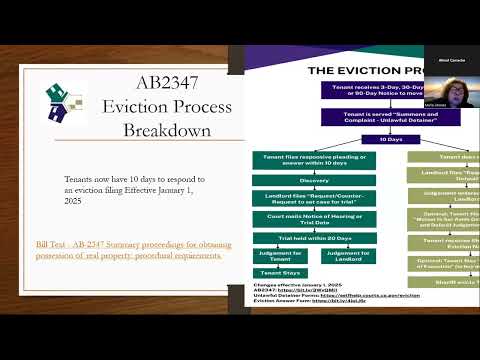
Eviction timing and process: Presenters walked through common notice types and court timing. Typical notices include 3‑day "pay or quit" notices, 30‑ or 60‑day termination notices and 90‑day notices for some voucher‑based tenancies. If a tenant does not respond to a filed complaint, a default judgment may allow a sheriff to post a notice giving the tenant five days to vacate.
Rent increases and indexing: Regional consumer‑price indexing was discussed; the presenter cited a 6.3% figure for the Bay Area excluding Santa Clara and 7.7% when Santa Clara County is included, and reiterated that local rent stabilization rules can take precedence.
Other state laws discussed: The presentation summarized AB 2747 (credit‑reporting by landlords with 16+ units, with a maximum fee discussed in the meeting) and SB 680 (prohibiting certain fees for notice delivery and requiring prompt lock changes and reimbursements for victims of domestic violence who provide a police report or court order).
Security deposits and documentation: Presenters said landlords should take move‑in and move‑out photos and provide an itemized statement for any deductions. The meeting noted a 21‑day deadline (as discussed in the presentation) for returning deposits and explained when receipts or vendor invoices must be provided to tenants.
Mediation and remedies: Project Sentinel and city staff encouraged tenants to document problems in writing and to request reimbursement or mediation when appropriate. On a common question about higher utility bills after a landlord ran dehumidifiers for several days, Jiménez advised: "You could always request that" the landlord reimburse the difference by documenting normal usage and the spike caused by the remediation equipment, and consider mediation if the landlord refuses.
Access to help: Presenters listed Project Sentinel service areas and referrals to Community Legal Services and other legal‑aid resources for tenants who may need legal advice. The city announced a housing help center event offering free 15‑minute legal consultations and Project Sentinel assistance on Thursday from 6–8 p.m. at the local office (298 Escuela Avenue).
What the presenters warned against: Jiménez said tenants are sometimes pressured to leave immediately with threats that police or sheriffs will remove them; she urged residents to seek information and, when appropriate, to file a response so they have a day in court and other options like mediation.
Next steps and resources: Presenters said they would circulate the slide deck and recording to attendees, and invited residents with case‑specific questions to use the city’s rent‑stabilization intake and the housing help center for individualized screening and referrals.
Ending: The session concluded with reminders of the upcoming help‑center hours and thanks to the presenter. The organizers said the slide deck and recording will be shared with attendees for follow‑up.