Get Full Government Meeting Transcripts, Videos, & Alerts Forever!
Get email alerts on the Energy Policy topic
No spam. Unsubscribe anytime.
Presenter urges rapid expansion of natural gas pipelines to lower costs and boost jobs
Summary
In a public address, a single presenter argued that expanding natural-gas infrastructure from Pennsylvania to New York and New England will lower energy costs and create jobs, and criticized recent energy policies in Europe and the Biden administration; no formal action or vote was recorded.
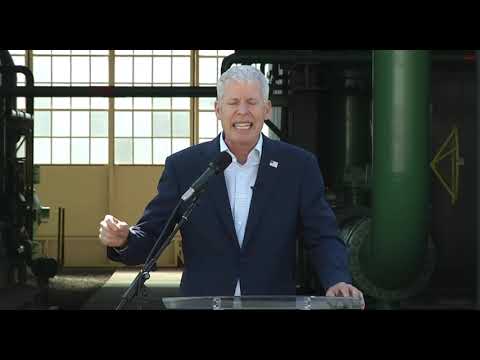
A presenter addressing an assembled crowd of corporate representatives, tradespeople and law enforcement called on expanded natural-gas production and new pipeline construction as the primary way to lower energy costs and revive manufacturing jobs.
“Massive increases in production of energy … enabled this transformation of human opportunity,” the presenter said, linking 20th-century economic growth to greater energy output and arguing that the United States must increase supply to restore jobs and industry.
The speaker criticized recent policy choices in Europe and the Biden administration, saying Europe “got energy wrong” and asserting that the Biden administration closed power plants and left an electricity sector that produced “no more electricity when they got into office than they got out” while costing “30% more.” Those figures and characterizations were presented by the speaker as evidence for his argument; the article does not independently verify those numeric claims.
Turning to specific regional projects, the presenter said an effort to expand natural gas from Pennsylvania into New York would help “New Yorkers and Long Islanders” by lowering bills and creating jobs, and named the Constitution Pipeline as a planned next project. He also praised a project referred to in the speech as “Nessi,” calling it “an awesome, absolutely awesome step forward.” The name is reported exactly as spoken in the address.
The remarks framed the speaker’s approach as “energy addition” and “energy dominance,” arguing that more energy supply is preferable to policies he described as “energy subtraction fearmongering.”
The speech was a statement of policy preference and political critique; the transcript does not record any motion, formal vote, or official administrative action taken during the event. There was no staff report, formal legal citation, or binding commitment by a public agency recorded in the remarks.
Context: the address invoked patriotic themes and historical references to World War II-era recovery to place the energy argument in broader national terms. The speaker repeatedly tied energy availability to economic opportunity and manufacturing, and concluded by reiterating support for “President Trump’s agenda.”
What happens next: the remarks constitute a public advocacy statement for pipeline expansion and energy policy changes; the transcript does not indicate any immediate procedural step, approval process, or permitting action initiated during the event.