Get Full Government Meeting Transcripts, Videos, & Alerts Forever!
Get email alerts on the Digital Divide And Srhr topic
No spam. Unsubscribe anytime.
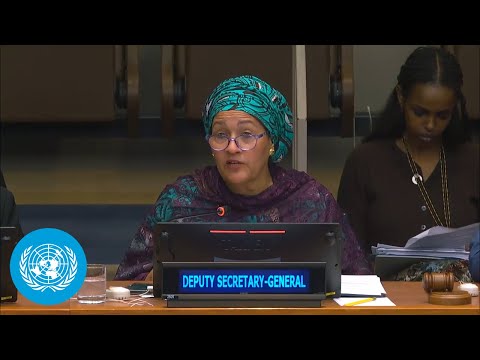
Representative of the Secretary‑General warns digital divide threatens sexual and reproductive health
Summary
At the opening of the Commission on Population and Development's 59th session, the Secretary‑General's representative said digital technologies offer large benefits but widening access gaps and online harms threaten sexual and reproductive health, and urged rights‑based governance and renewed research investment.
A representative of the Secretary‑General opened the 59th session of the Commission on Population and Development and warned that rapid digital change, if unmanaged, is undermining sexual and reproductive health and rights, especially for women and girls.
The speaker said digital tools have “enormous potential to accelerate progress on the ICPD Program of Action,” improving data analysis, health treatment and access to education. At the same time, he said, “the risks posed by digital technologies are significant,” and cited steep gaps in internet access: 93% of people in high‑income countries use the internet versus 39% in the least developed countries, and in low‑income countries just 21% of women are online.
Those gaps, the representative said, are mirrored inside countries — between rich and poor, urban and rural, and by age — and are compounded by gender inequality. “Women make up just one in four tech workers,” he said, and that exclusion, he warned, risks building gender bias into algorithms that shape access to finance, health care and other services.
The address also highlighted rising online harms. “Online spaces are also fueling an explosion of violence against women, including harassment, deep fakes, and hate speech,” the representative said, and added that discrimination spreading rapidly online deepens stigma around sexually transmitted diseases and women’s bodies, creating “serious risk for sexual and reproductive health of women and girls.”
As remedies, the speaker set two priorities: “Closing the digital divide and building a system of technological governance rooted in human rights.” He pointed to ongoing and recent multilateral efforts as foundations for action, naming the Global Digital Compact, the Pact for the Future and a newly launched independent scientific panel on artificial intelligence.
The representative stressed the need for inclusive decision‑making and evidence: young people, researchers and scientists must participate in shaping technological rules and investments. He noted that “90% of global research spending is concentrated in G20 countries,” and warned that when research budgets are cut the evidence base for policy erodes — a setback, he said, for the Sustainable Development Goals and the ICPD agenda.
The address concluded by placing the discussion in a broader context of global shocks — climate disruption, conflict and geopolitical instability — and by calling for governments, academia and civil society to secure both resources and rules so technology serves the public interest. He said the Secretary‑General’s UN 80 initiative will help free up UN system expertise and resources for youth, population and sexual and reproductive health work.
The representative closed by wishing the Commission “constructive debate and meaningful conclusions” as it carries the session’s work forward toward the 2030 agenda.