Get Full Government Meeting Transcripts, Videos, & Alerts Forever!
Get email alerts on the Liquor License Policy topic
No spam. Unsubscribe anytime.
Alamosa City clerk trains council on liquor-license rules as neighborhood definition and petition standards are debated
Summary
City Clerk Miss Martinez led a training for Alamosa City Council on local liquor-license authority, outlining application rules, hearing types and delegated administrative powers; councilors debated whether to redefine the city'wide "neighborhood" and whether petition evidence should be required to show "need and desire."
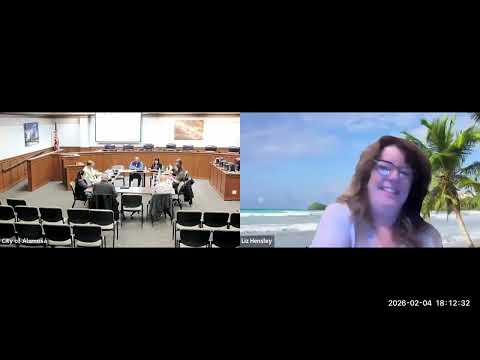
Alamosa City Clerk Miss Martinez led a work-session training for the Alamosa City Council on the council's role as the local liquor-license authority, reviewing application requirements, hearing procedures and the administrative powers she exercises.
The training focused on how state and local rules interact, what applicants must prove at "needs and desires" hearings, and the limited circumstances when council must take formal action. "We're doing a training for you guys. You guys do serve as our liquor license authority," Miss Martinez told council at the start of the session, and she provided a condensed guide rather than the full code.
Why it matters: Council decisions on licensing affect where alcohol can be sold in the city and what evidence applicants must present; weak records can prompt successful appeals and rollback of local approvals. Miss Martinez emphasized the dual system: manufacturing and wholesale licenses are primarily state-regulated, while most retail licenses are regulated by both state and local authorities. She told council there are three broad license classes and reviewed eligibility requirements, background checks and fees.
Key details and debate: The clerk explained application requirements include being 21 or older and completing individual history forms and fingerprint checks; she cited Regulation 47-310 for the "good moral character" standard used in background reviews. She also described a statutory denial rule: the city cannot accept the same class of application within 500 feet of a location that was denied for needs and desires within the prior two years (one year for fermented malt beverage and wine). "We have 40 current active licenses," Miss Martinez said, listing hotel-and-restaurant, tavern and retail counts as part of staff's overview.
Two policy issues drew extended council discussion. First, the city's presumptive neighborhood has been defined in practice as the city limits plus a one-mile radius. Staff and councilors debated alternatives, including a moving neighborhood measured from a proposed location (for example a 500-foot radius) or static subareas such as wards or quadrants. Staff cautioned that the present definition "punts" the neighborhood question and limits council's ability to consider localized saturation or gaps.
Second, councilors disagreed about evidence standards at needs-and-desires hearings. Several members and staff said many applicants arrive without sufficient documentation to meet the council's burden of persuasion. Councilor Chris Carson said he had been "under the impression last year that we were ceremonial" and could not deny applicants, a view other members attributed to the minimal evidence some applications presented. Councilor Jackie Vill said petitions and signatures are one of the "very easiest ways" to show demand, noting petitions and people showing up at hearings help demonstrate community support. Other councilors cautioned that requiring petitions could disadvantage new businesses that lack a local network and urged that any higher standard be applied consistently.
Enforcement and procedure: Staff reviewed the difference between suspension (commonly handled through pre-stipulation with prosecutors and law enforcement), which addresses compliance checks and lower-level violations, and show-cause hearings, which are formal proceedings used only for serious issues such as repeated service to minors or threats to public welfare. Staff noted that show-cause hearings are treated like quasi-judicial proceedings with sworn testimony and cross-examination when a licensee's property interest is at stake.
Next steps: Council members suggested scheduling a focused work session if they want to revisit the city's neighborhood definition or the prospect of an entertainment district (which staff said carries liability questions). Miss Martinez offered to provide copies of the relevant ordinances and the full code sections on request. The training concluded and council moved on to the regular meeting agenda.
Quotes: "We're doing a training for you guys. You guys do serve as our liquor license authority," Miss Martinez said at the start of the meeting. Councilor Chris Carson said he had been "under the impression last year that we were ceremonial" and could not deny licenses, a perception other members said likely stemmed from applicants meeting the minimal pre-criteria but providing weak hearing records. Miss Martinez summarized the license inventory: "We have 40 current active licenses," including hotel-and-restaurant, tavern and retail categories.
What to watch: Any formal proposal to redefine the city's "neighborhood" for licensing or to add petition requirements would require follow-up staff research and possible ordinance changes; council members indicated interest in further discussion but raised concerns about fairness and legal constraints on local conditions imposed on licenses.