Get Full Government Meeting Transcripts, Videos, & Alerts Forever!
Get email alerts on the Public Comment Policy topic
No spam. Unsubscribe anytime.
Sellersburg council approves amended first reading of ordinance tightening public-comment rules
Summary
The Town of Sellersburg approved the first reading of Ordinance 2026-R-008, which replaces the public-comment policy to require sign-up, limits comments to agenda items with three-minute slots, and authorizes removal for disorderly conduct; the council added a subsection clarifying citizens may still contact officials by phone, mail, or email.
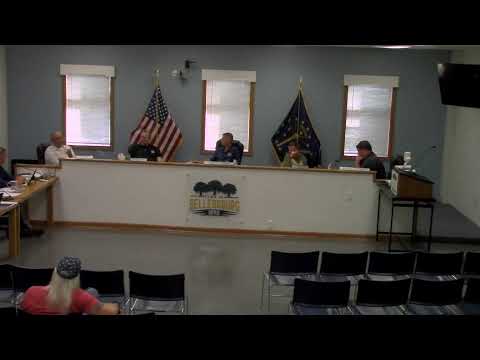
The Town of Sellersburg on April 13 approved the first reading of Ordinance 2026-R-008, a rewrite of the town code section that governs public comment at council meetings. The ordinance limits public comments at regular meetings to agenda items, requires speakers to sign a public-comment sheet before the meeting, and imposes a three-minute time limit per speaker.
Town legal counsel explained the change is designed to align the town’s rules with Indiana law. "Public comment at regular meetings remains a privilege, not a right," the counsel told the council, noting the state’s Open Door Law requires meetings be open to observation but does not require a forum for public remarks. The draft also cites Indiana Code 35-45-1-3 to justify removing individuals whose behavior constitutes disorderly conduct and includes a provision authorizing up to a 90-day ban for violations of the rule.
During public comment, resident Charles Pierce objected to removing a broader "general public" comment category and said the restriction would impinge on free-speech protections. "I believe that's violating my First Amendment rights," Pierce said, pressing the council for clarification about when non-agenda remarks could be raised. Town counsel responded that the town retains discretion to permit speakers but must keep the forum content neutral and narrowly tailored to time and manner.
Council members moved to amend the ordinance during the meeting to add a subsection noting that members of the public may still contact elected officials, the town manager, or department heads by phone, mail, or email about matters not on the agenda; that amendment was approved and the ordinance passed its first reading as amended. Council indicated the second reading and final vote will be scheduled according to council procedures.
The ordinance text also spells out behavioral restrictions (no profanity, no personal attacks based on protected characteristics, and prohibitions on libelous or defamatory conduct) and requires sign-up prior to the meeting. The council’s action replaces prior language and supersedes conflicting resolutions upon adoption.
The council's next steps are to set the schedule for the second reading and any final adjustments to the ordinance; no final adoption occurred at the April 13 meeting.