Get Full Government Meeting Transcripts, Videos, & Alerts Forever!
Get email alerts on the Special Tax Districts topic
No spam. Unsubscribe anytime.
Greenwood County policy clarification on special tax districts draws strong pushback from commissioners
Summary
County staff said a May policy clarification to align special tax-district spending with state law and an Attorney General opinion will require many districts to amend budgets; multiple tax-district commissioners asked for a grace period, saying compliance requires months and they cannot refund previously collected funds.
Greenwood County staff told the council that a policy clarification approved in May will narrow the permissible uses of special tax-district funds to items that serve the public rather than private homeowners associations, and that county staff have begun notifying districts whose budgets include nonpermissible items.
"What the attorney general says is that fees that serve only private owners or the homeowners association itself would be improper," County Treasurer and Assistant County Manager Stephanie Dorn told the council, citing an Attorney General opinion dated Jan. 21, 2021. Dorn said staff has asked some districts to submit amended budgets after legal review.
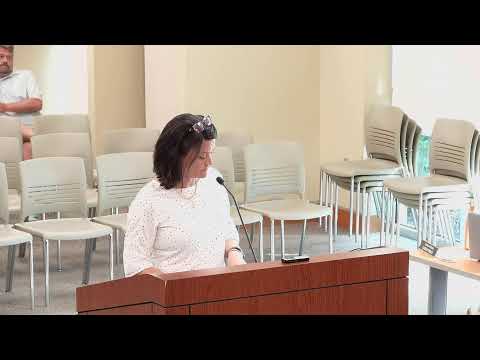
That guidance prompted extended public comment from tax-district commissioners and residents who said the change will be disruptive and asked the council for more time. Jim Hall, a commissioner and treasurer of the Druid Hills tax district, described practical issues for districts that rely on small budgets to maintain shared infrastructure and asked whether making facilities public would shift liability or obligations to the county. Dorn replied that funds can be used for public improvements where the asset is truly public, but that county staff cannot use tax dollars to pay for HOA-only expenses.
Several commissioners asked how districts that collect fees but do not have homeowner-association mechanisms can convert to a new funding model. "We're begging you to give us a grace period" to establish private funds or otherwise comply, said Miriam Bickerton, tax commissioner from Wellington Green. Bickerton and others said legal and covenant changes necessary to permit alternative funding streams can take many months to complete.
The treasurer stressed limits on refunds: she said the county cannot write checks to return collected tax dollars to HOAs because once collected they are public funds; if a district dissolves before spending balances, county guidance says funds would be used or donated under the rules in place.
Council members and staff discussed possible grandfathering for clearly public uses, pointing to examples such as dams or public roads where district funds have historically paid for necessary repairs; Dorn said public assets remain permissible uses. Council members asked staff to continue outreach and to provide clearer written lists of permissible and impermissible expenses; Dorn said those items had been included in the budget request letter and the policy documentation sent to districts.
No formal change to the policy was made at the meeting; staff said they will continue to accept amended budgets and assist commissioners who need help meeting deadlines ahead of the budget readings and the public hearing schedule.
The meeting record shows widespread concern among commissioners about timing and process, and multiple speakers requested staff and council consideration for additional time to comply.