Get Full Government Meeting Transcripts, Videos, & Alerts Forever!
Get email alerts on the Capital Improvements topic
No spam. Unsubscribe anytime.
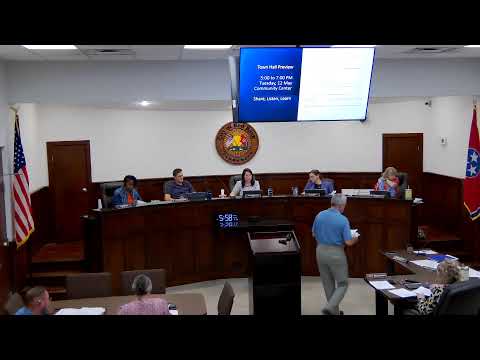
Red Bank commission debates five‑year CIP, edges toward compromise on sidewalks and tax plan
Summary
Commissioners reviewed the city’s first capital improvement plan, debated keeping three transportation projects on the TIP (Easton Avenue sidewalks, Memorial Drive sidewalks, Safe Streets for All demonstration), and discussed a proposed 16‑cent property tax increase in FY27 to help fund long‑range projects.
Red Bank City Commission members spent the bulk of a work session reviewing a proposed five‑year capital improvement plan and a budget estimate that includes a proposed 16‑cent property tax increase in fiscal 2027, a 2.25% cost‑of‑living adjustment for city employees and continued investment in parks and a future public‑works facility.
The presentation by Mr. Brandham laid out the plan’s strategic themes: a first‑ever CIP, sustaining core municipal services, staff compensation adjustments and a list of infrastructure priorities. He told commissioners the FY27 proposal would “set the rate at $1.29” if the commission authorizes the 16‑cent increase, and that a similar addition could be necessary in FY28.
Why it matters: commissioners said the CIP provides a longer‑term view of revenue needs and tradeoffs. Keeping projects on the TIP can signal intent to raise revenue later, preserve grant match eligibility and help secure federal or state funding, while removing projects risks forfeiting matching dollars.
Major items and points of debate
- TIP projects under discussion: Vice Mayor and staff asked to keep three projects on the TIP list for future funding consideration—sidewalks on Easton Avenue, sidewalks on Memorial Drive and a Safe Streets for All demonstration grant. Staff and commissioners clarified that, as presented, none of those projects would draw FY27 funds because their earliest starts are FY28–FY30. Director Slay and staff explained the TIP entries are meant to position Red Bank for grant funding and partnership with regional programming.
- Grant mechanics and cash‑flow: staff explained many transportation grants operate on an 80/20 match (the city fronts 100% and is later reimbursed ~80%) and that reimbursements come out of general‑fund cash flow. Finance staff said the city would use general‑fund cash flow rather than borrowing where possible, but slower reimbursements can strain reserves.
- Safety and prioritization: several commissioners emphasized safety urgency on Easton Avenue and Memorial Drive. Commissioner Holmes described attempting to walk Easton during campaigning in 2024 and said, “it was very dangerous,” arguing that Easton is the highest‑priority safety project. Other commissioners echoed concerns about employees (waste collection crews) and pedestrians on those corridors.
- Tradeoffs and compromise: commissioners worried that funding all three TIP projects would create large future tax implications and strain staff capacity to deliver overlapping projects. After lengthy discussion, commissioners coalesced around a compromise to keep Easton Avenue sidewalks (broad agreement) and Memorial Drive sidewalks on the CIP/TIP while removing the larger Safe Streets for All demonstration from the immediate list; proponents warned that striking projects risks losing an 80% grant reimbursement and leaving matching funds on the table.
- Cost and timing uncertainty: staff noted CIP cost figures are preliminary estimates drawn from prior projects and TPO figures rather than engineering 90th‑percentile cost estimates; commissioners observed costs are likely to rise between planning and construction years (FY29–FY31). One line in the CIP was read aloud as “1.244K” (discussed as the project total in the packet); staff said such figures reflect current best estimates and will be refined during later design phases.
- Tax strategy and reserves: the proposed approach favors incremental tax increases in response to community feedback to spread the impact. Staff said the FY27 proposal uses a modest portion of fund balance (roughly $800,000 was referenced during discussion) but would keep the city within the state’s ‘green’ financial health band. Commissioners asked for further detail on the effect of reassessment years on revenue per penny of tax rate.
What’s next: staff will refine cost estimates and bring subsequent decision points back to the commission (design approvals, contract approvals and grant acceptance). Commissioners directed staff to continue analyzing tradeoffs and to return data on percent changes for key budget lines if possible. A town hall on the budget was scheduled for next Tuesday to solicit public feedback.
Ending: the commission concluded the CIP discussion after reaching a working compromise on which TIP projects to keep on the list and moved on to citizen comment and consent items.