Get Full Government Meeting Transcripts, Videos, & Alerts Forever!
Get email alerts on the Budget Finance topic
No spam. Unsubscribe anytime.
County manager lays out tight FY 2026–27 budget; tax rate held, courthouse expansion prioritized
Summary
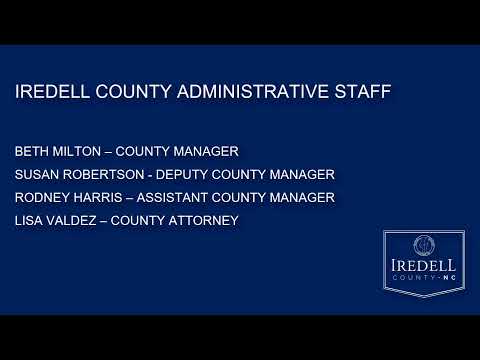
Iredell County Manager Beth Milton presented a recommended FY 2026–27 balanced general fund budget of $354,158,380, holding the county tax rate at $0.50 per $100 valuation while describing service pressures, proposed cuts, personnel reclassifications, an $11.75 million courthouse expansion, and set‑aside contingency for expected state and federal mandates.
Iredell County Manager Beth Milton presented the recommended FY 2026–27 general fund budget to the Board of Commissioners on May 5, proposing a $354.16 million budget while retaining the county tax rate at $0.50 per $100 valuation and stressing the squeeze from state and federal policy changes.
Milton framed the budget as a ‘‘plan for the worst and hope for the best,’’ noting growth pressures — the county grew roughly 2.8% between July 2020 and July 2025 — and uncertainty from pending state legislation and federal changes that shift costs to counties. She told the board the Planning Board and staff had prioritized cost‑cutting and reserves to avoid raising the tax rate during a fourth year of reappraisal.
Key fiscal elements Milton highlighted include a recommended capital improvement plan of about $22.24 million (a year‑over‑year decrease), with $11.75 million proposed for a courthouse expansion that the county prioritized over a new health department building. Major capital items also include $3.6 million for ambulance replacements and $1.79 million to update emergency dispatch radio consoles. Milton said those three projects account for roughly 77.1% of next year's proposed CIP.
On personnel, Milton said the county received 32 new position requests and 31 reclassification requests; she recommended funding no new positions because of constrained revenues but reallocating six vacant positions to create four deputy sheriff night‑shift posts, one paramedic, one mechanic and one part‑time library assistant, and eliminating 28 other vacant full‑time positions (19 of which are in the Department of Social Services). She warned the board of an upcoming federal change (described in the meeting as "HR1") that will require counties to assume 75% of administrative costs for food nutrition services starting Oct. 1, increasing local costs.
Milton also described education funding pressures: the county's recommended capital funding for schools is $17,777,768 for FY 2026–27 and debt service of $29,991,258; she noted an estimated $4 million shortfall for exceptional‑children programs because state funding does not fully cover local need. The manager projected a 1.6% ad valorem growth for the upcoming year, down from prior projections, and estimated an unassigned fund balance of about 33% of the recommended budget.
Following the presentation commissioners discussed revenue options, unfunded mandates, and whether to pursue voter‑approved revenue streams such as occupancy or local sales tax measures. Several commissioners emphasized a preference to avoid raising the tax rate this year, and staff were asked to analyze potential revenues and present findings at upcoming budget workshops scheduled for the following week.
Milton closed by recommending adoption of the balanced FY 2026–27 general fund budget and by noting that the board will have opportunities to adjust the proposal through workshops and the formal adoption process.